Access your Back Office at your fingertips.
Download the app now on Google Play Store.
Scan the QR code
You can also scan QR code with your phone to download the app.
Why are location requirements important for my users?
Updated
On this page
Modern digital lending platforms operate across multiple regions, each with its own regulatory requirements, risk environments, and operational constraints. Because of this, controlling where a lending application is accessible becomes an important part of platform governance.
In Lendsqr, both the mobile and web applications have location requirements enabled by default. This geo-restriction feature is designed to help lenders manage where their services are available, ensuring compliance with local laws while also supporting risk-based decision-making.
Location settings play a central role in helping lenders define their operational boundaries. By controlling access at the geographic level, lenders can ensure that only approved users from specific regions can interact with their lending products.
This guide explains why location settings exist, the benefits they provide, and how lenders can configure them within the Lendsqr Admin Console.
Location-based restrictions are enabled by default to support two primary operational needs: regulatory compliance and risk management. These two areas are critical for any lending institution operating in a digital environment.
Legal compliance and operational reach
One of the most important reasons for enabling location settings is to ensure compliance with local financial regulations. Lending is a heavily regulated industry, and different countries have different licensing requirements, consumer protection laws, and operational restrictions.
By using location controls, lenders can restrict their platform to only the regions where they are legally authorized to operate. This helps prevent accidental exposure to jurisdictions where lending activity may be restricted or unlicensed.
For example, a lender licensed to operate in a specific country can ensure that users outside that jurisdiction are automatically blocked from accessing the platform. This reduces legal risk and ensures that the business remains within its approved operational boundaries.
Location settings, therefore, act as a safeguard, helping lenders maintain compliance without requiring manual enforcement at every stage of user interaction.
Risk-based user management
Beyond compliance, location settings also support risk-based decision making. Lenders often assess borrower risk using multiple data points, and geographic location can be one of those signals.
Some regions may have higher default rates, stricter regulatory challenges, or operational inefficiencies that make lending less viable. In such cases, lenders may choose to restrict access to users from those locations.
Geo-blocking allows lenders to implement these decisions at the platform level. Instead of handling restrictions individually, lenders can configure rules that automatically prevent users from specific locations from accessing services.
This improves risk control while ensuring consistency in how policies are applied across the platform.
Benefits of configuring location settings
Proper configuration of location settings provides several operational and strategic benefits for lenders using Lendsqr.
Enhanced regulatory compliance
One of the most immediate benefits is improved compliance with local and international lending regulations. By restricting access to approved regions, lenders reduce the risk of operating in unauthorized markets.
This is especially important for digital lenders that may have users attempting to access services from multiple countries. Without proper restrictions, lenders may unintentionally expose themselves to regulatory violations.
Location settings help ensure that only eligible users can access lending services, aligning platform usage with legal requirements.
Improved risk management
Geographical restrictions also support stronger risk management strategies. Lenders can exclude regions that have historically shown higher default rates or where operational challenges make repayment collection difficult.
By limiting exposure to high-risk areas, lenders can improve portfolio quality and maintain healthier lending performance.
This approach allows organizations to apply risk policies at scale rather than evaluating each borrower individually based on location-related concerns.
Streamlined operations
Another key benefit is operational efficiency. By focusing only on approved regions, lenders can streamline customer support, compliance management, and operational workflows.
Teams do not need to manage inquiries or issues from unsupported locations, which reduces unnecessary workload. This allows internal resources to focus on users within approved markets, improving overall service quality.
In addition, limiting geographical scope helps ensure that marketing efforts, product design, and customer onboarding are aligned with the same target regions.
How to configure your location settings
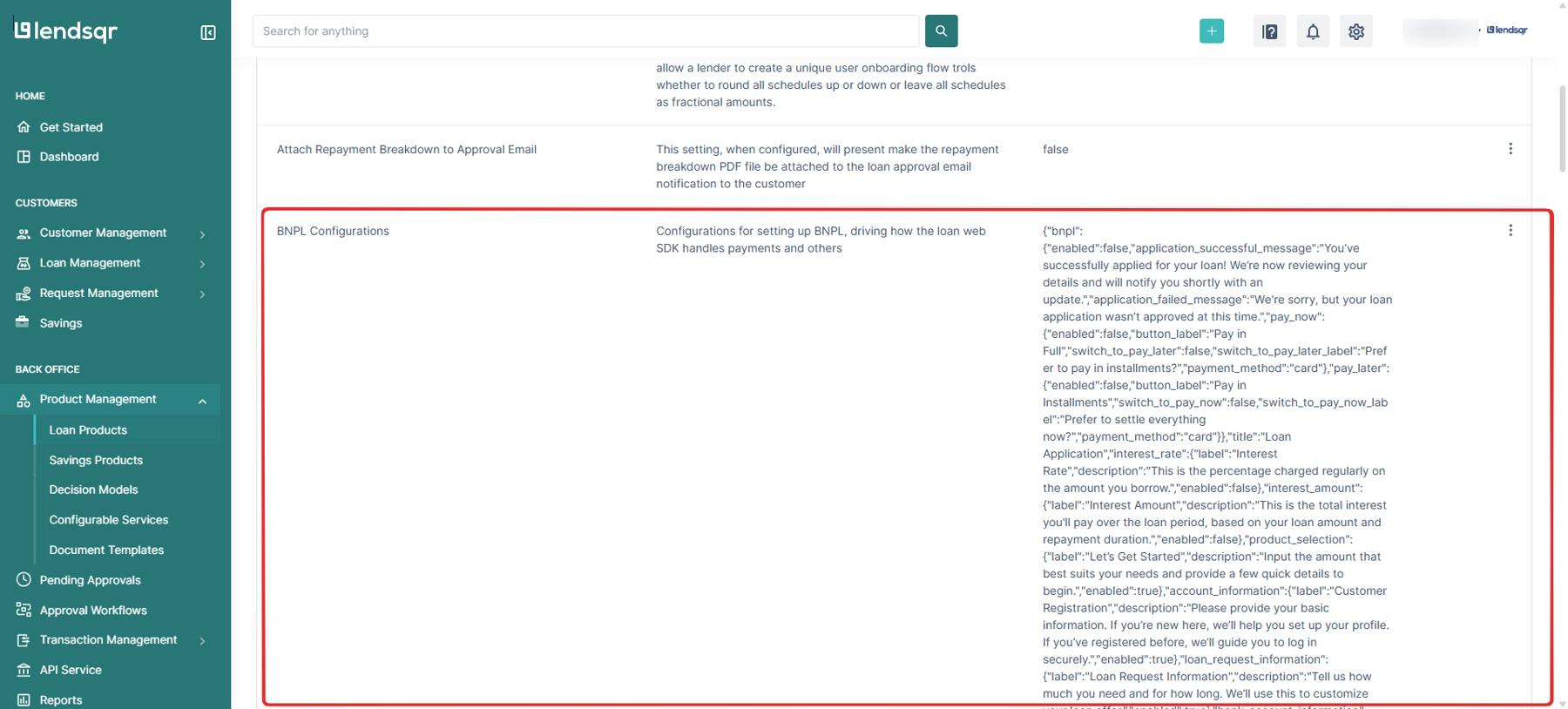
Lenders can easily manage location-based restrictions directly from the Lendsqr Admin Console. The configuration process is designed to be straightforward while still providing flexibility for different business needs.
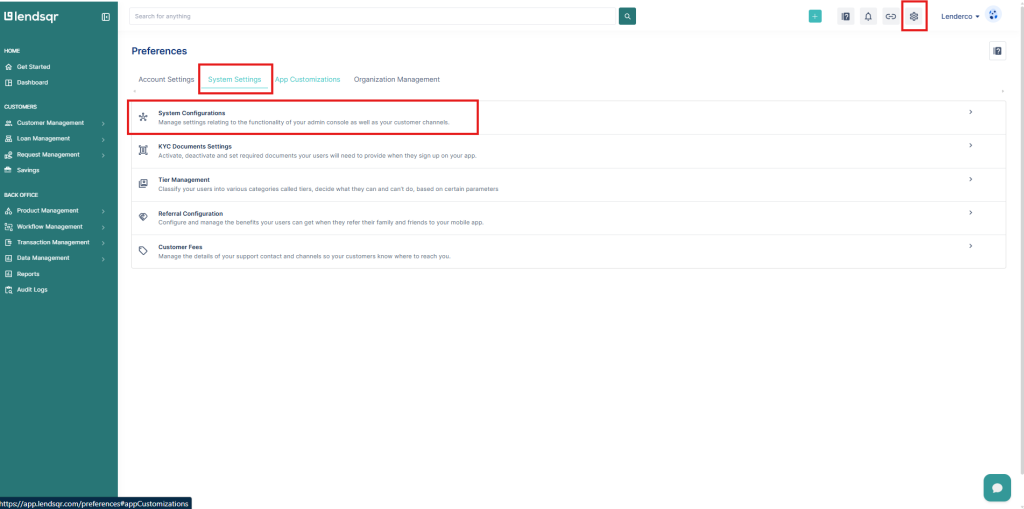
Step 1: Access the admin console
To begin, log into your Lendsqr Admin Console at app.lendsqr.com.
Once logged in, navigate to the top area of the interface and click on the Settings icon. This section contains all system-level configuration options, including security and access controls.
The settings menu serves as the central hub for managing platform behavior and administrative preferences.
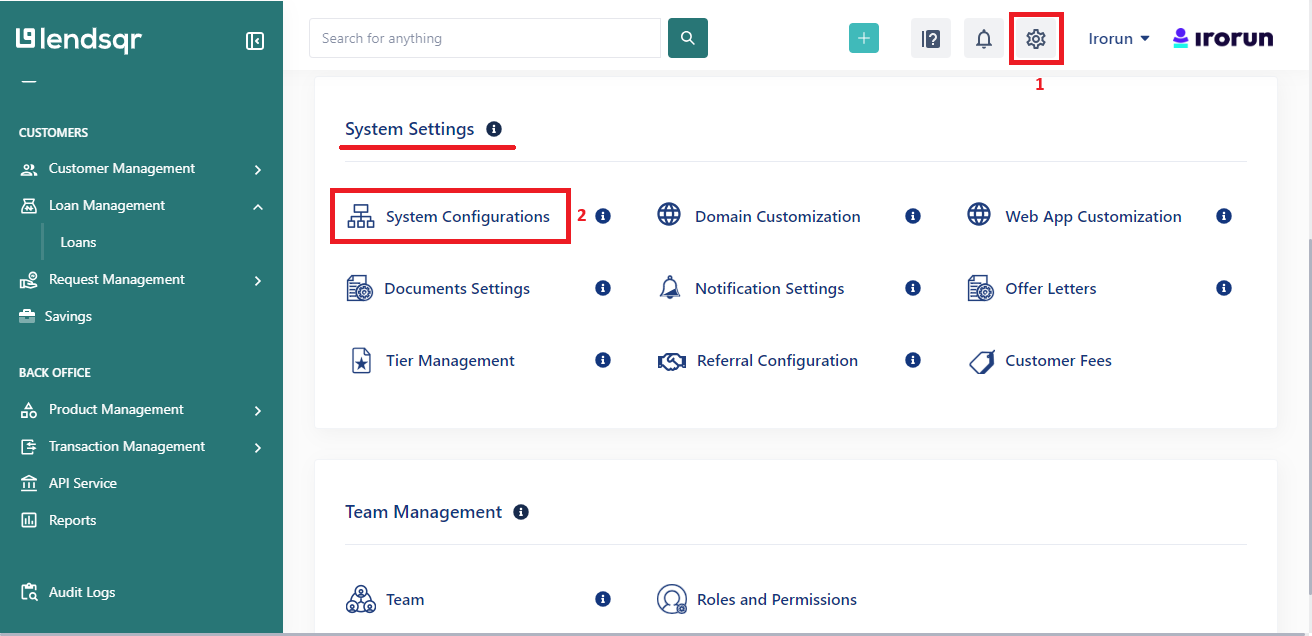
Step 2: Open system configurations
Within the settings menu, select System Configurations.
This section allows lenders to manage core platform settings that affect how the system behaves across different modules.
System configurations include options for product setup, operational rules, and access restrictions. It is an important area for defining how your lending platform operates at a structural level.
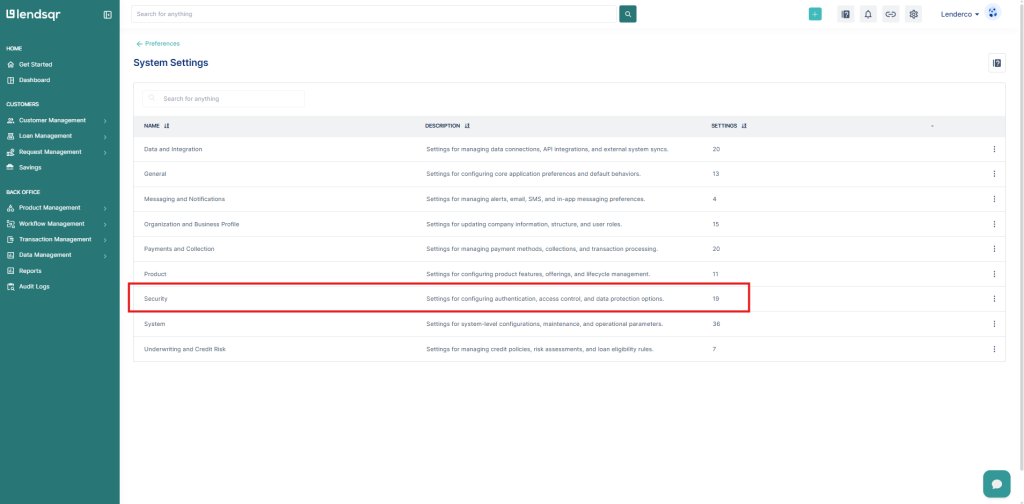
Step 3: Select security settings
After opening system configurations, navigate to the Security section.
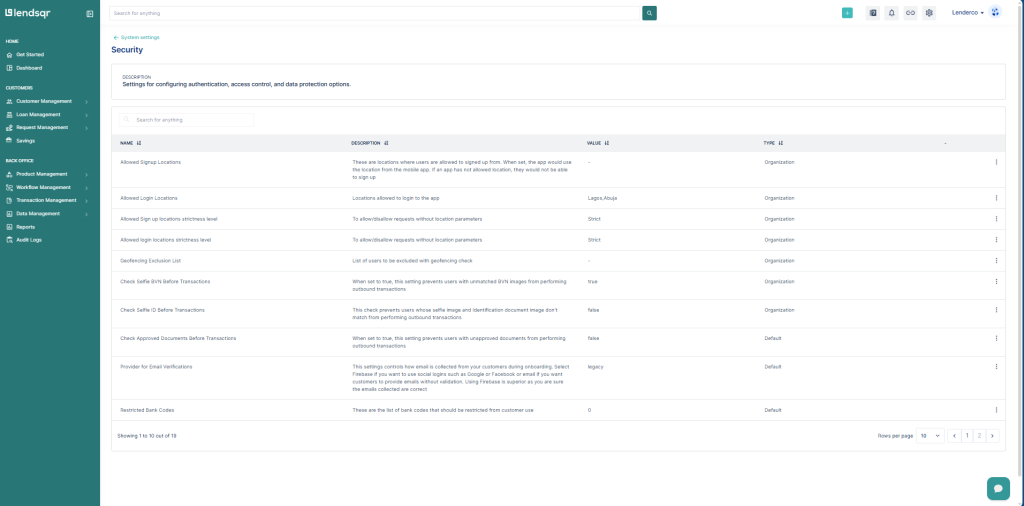
This is where geographical restriction controls are located. The security panel allows lenders to define which countries or regions are allowed or restricted from accessing the platform.
From this interface, lenders can set country-specific access rules based on their compliance requirements and risk strategies.
For example, you may choose to allow access only from your primary operating country while blocking all other regions. Alternatively, you may allow multiple approved countries while restricting specific high-risk locations.
These settings take effect at the platform level, ensuring consistent enforcement across all users.
Best practices for using location settings
To get the most value from location-based restrictions, lenders should apply a few best practices when configuring their settings.
First, always align location rules with your legal operating licenses. This ensures that platform access reflects your actual regulatory permissions.
Second, regularly review your restricted and allowed regions. Business expansion or regulatory changes may require updates to your configuration over time.
Third, avoid overly broad restrictions unless necessary. While strict controls improve compliance, they may also limit legitimate user access if not carefully managed.
Finally, ensure that internal teams understand the purpose of location settings. This helps prevent confusion when users are blocked based on geographical rules.
Location settings in Lendsqr provide an important layer of control for lenders operating in regulated and risk-sensitive environments. By enabling geographical restrictions by default, the platform helps ensure compliance, reduce exposure to high-risk regions, and streamline operational focus.
When configured correctly, these settings allow lenders to define clear operational boundaries while maintaining flexibility to adjust as business needs evolve. This balance between control and adaptability is essential for scaling digital lending operations safely and efficiently.
By understanding how location settings work and applying them strategically, lenders can strengthen both compliance and risk management while ensuring a more focused and secure lending experience.