Access your Back Office at your fingertips.
Download the app now on Google Play Store.
Scan the QR code
You can also scan QR code with your phone to download the app.
Introduction to audit logs on the Lendsqr admin console
Updated
On this page
As digital lending operations become more sophisticated, maintaining visibility into platform activity is increasingly important. Lenders today do not only need tools for loan disbursement and repayment management, they also require systems that provide transparency into who performed specific actions, when those actions occurred, and how platform activities impact operations.
This is where audit logs become essential. Within the Lendsqr admin console, the audit logs feature provides lenders with a centralized record of actions performed across the system. It enables administrators to monitor activities carried out by platform admins, as well as those completed by end users within the lending application. This visibility supports stronger accountability, better security oversight, and more informed operational decision-making.
By maintaining a detailed history of system activities, audit logs help lenders investigate issues, monitor administrative actions, reduce operational risk, and improve internal governance.
The audit logs section on the Lendsqr admin console records activities carried out by both administrators and end users within the platform ecosystem. It acts as a historical record of interactions, allowing lenders to review important actions that have taken place over time.
For admin users, audit logs capture activities performed on the Lendsqr admin console. This includes operational decisions, updates to records, user-related actions, and loan management activities. Rather than relying on memory or manual reporting, administrators can easily review past activities whenever clarification is needed.
For end users, audit logs provide visibility into actions performed within the borrower-facing application. This helps lenders better understand customer behavior, troubleshoot reported issues, and identify unusual activity patterns that may indicate fraud or misuse.
In practical terms, the audit log functions as a digital trail of accountability. Every significant action leaves a record that administrators can reference when investigating discrepancies or reviewing operational performance.
Why audit logs matter in lending operations
Lending operations involve numerous moving parts. Loan approvals, repayments, identity verification, customer onboarding, wallet activity, and card management often happen simultaneously across multiple users and teams. Without a reliable tracking mechanism, identifying who performed specific actions can quickly become difficult.
Audit logs help eliminate uncertainty by providing a transparent record of platform activity. This transparency becomes especially important in environments where multiple administrators have access to sensitive operational controls.
For example, imagine a borrower disputes the rejection of a loan application. Rather than relying on assumptions, an organization can review audit records to determine when the application was reviewed, who handled it, and what actions were taken. Similarly, if a compliance concern arises regarding document approvals, audit logs provide clear visibility into administrative actions.
Beyond issue resolution, audit logs also strengthen operational accountability. Since administrator actions are visible and traceable, teams are more likely to follow established procedures and maintain consistency when managing sensitive lending processes.
Security is another major benefit. Suspicious activity, unauthorized access attempts, or unusual behavioral patterns may become easier to detect when historical system actions are readily available for review.
Types of activities recorded in audit logs
Audit logs in Lendsqr capture a wide range of activities across both the admin console and user-facing applications. These records help lenders maintain visibility across operational, administrative, and customer-related workflows.
Admin activities
Administrative activities logged within the system often involve operational actions carried out by team members managing lending processes.
One common category is loan management. Audit logs record actions such as loan approvals and loan declines. This visibility helps organizations monitor decision-making processes and maintain consistency in lending operations.
KYC management activities are also recorded. For example, when administrators approve or decline customer verification documents, these actions are logged within the system. This becomes particularly valuable during compliance reviews or when resolving disputes related to account verification.
User management activities are equally visible through audit logs. Actions such as viewing customer details, reviewing profiles, or interacting with account information may appear in system records. This additional transparency supports stronger governance practices and helps organizations monitor administrative access to sensitive customer information.
Login activities are typically recorded, allowing administrators to track when users access the platform. This information may prove useful when reviewing account security concerns or investigating suspicious activity.
Loan applications are another key user activity reflected within audit logs. Tracking application attempts helps lenders better understand borrower behavior and identify patterns that may require attention.
Card management actions may also appear in system records. For example, activities related to adding, updating, or interacting with payment methods can help administrators monitor customer account behavior.
Wallet-related actions are similarly recorded, providing lenders with visibility into financial interactions taking place within the platform. This becomes especially useful when investigating reported transaction issues or resolving customer support concerns.
Together, these records create a broader operational picture, helping lenders maintain oversight across both internal administrative functions and borrower-facing experiences.
How audit logs improve operational transparency
One of the most significant advantages of audit logs is improved transparency.
In many lending organizations, multiple teams interact with the platform daily. Customer support representatives, compliance officers, loan officers, and operational managers may all perform actions affecting borrower accounts. Without visibility into who completed what action, confusion can arise quickly.
Audit logs reduce ambiguity by establishing a reliable historical record. Instead of asking team members to explain what happened, administrators can reference actual system records to review timelines and decisions.
For example, if a borrower claims their KYC document was unfairly rejected, administrators can review logs to identify when the document was reviewed and what action was taken. If a loan status changes unexpectedly, teams can verify who initiated the update and when it occurred.
This level of transparency often leads to faster issue resolution, stronger trust between teams, and better internal accountability.
How to access audit logs on the admin console
Accessing audit logs on the Lendsqr admin console is straightforward and can be completed in just a few steps.
Step 1: Log into the admin console
Begin by logging into your Lendsqr admin console dashboard using your authorized administrator credentials.
Access rights matter when viewing sensitive platform information. Depending on your organization’s permission structure, some users may have limited visibility into administrative records.
Step 2: Navigate to the back office section
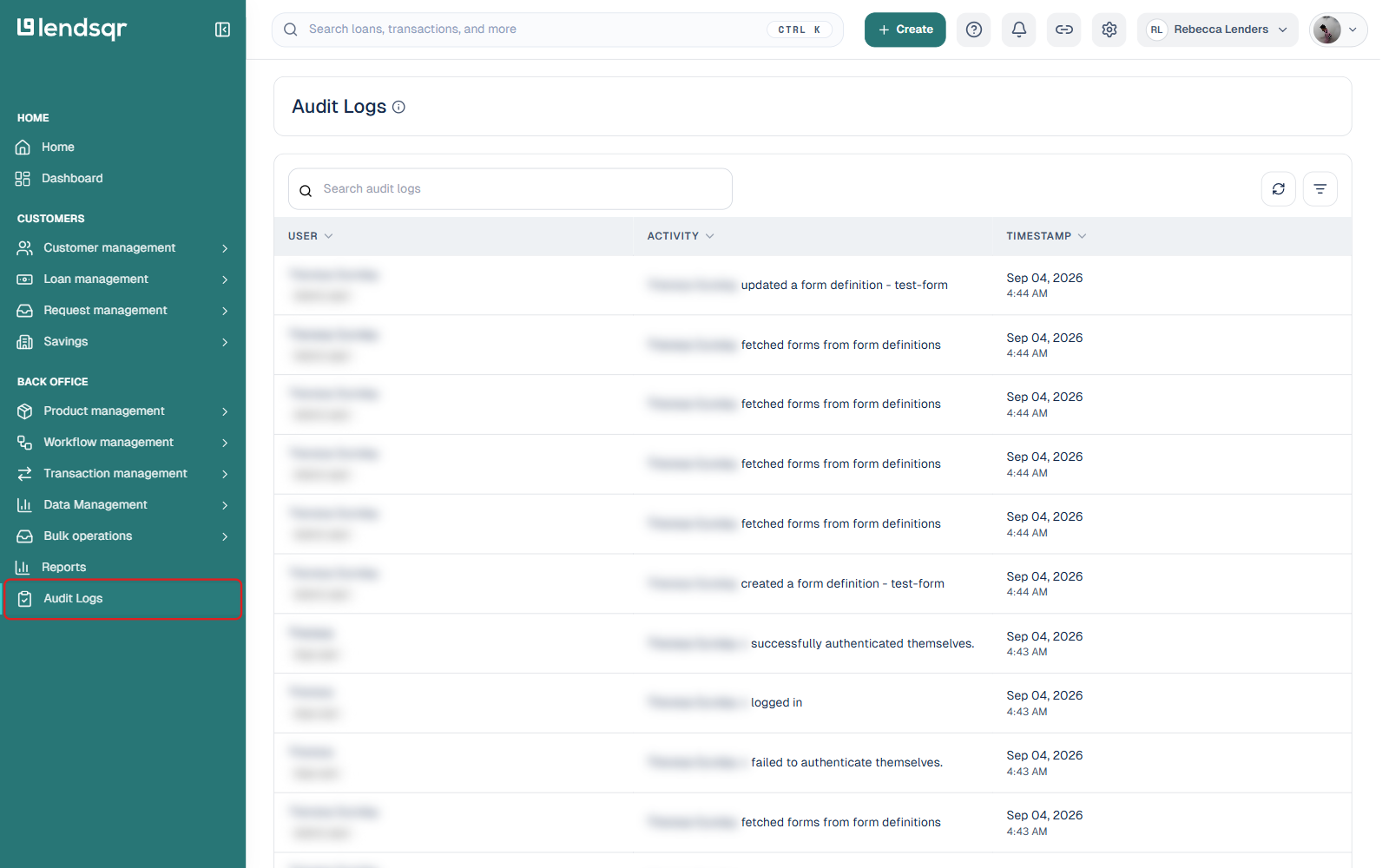
Once logged in, locate the menu positioned on the left-hand side of the dashboard.
Scroll down until you find the BACK OFFICE section. This area contains operational tools and administrative features designed to support platform monitoring and internal oversight.
Step 3: Open audit logs
Under the BACK OFFICE menu, click Audit Logs.
Selecting this option opens the audit log dashboard, where you can view activities performed by both admins on the admin console and end users within the application.
This centralized view makes it easier to monitor platform activity without needing to switch between multiple systems or manually compile operational reports.
Although audit logs automatically record activities, lenders gain the most value when they review logs proactively rather than reactively.
Organizations should establish a regular schedule for reviewing administrative activity, especially for high-impact workflows such as loan approvals, KYC reviews, and account modifications. Regular monitoring helps identify inconsistencies before they become larger operational problems.
It is also important to restrict audit log access to authorized personnel only. Since logs may contain sensitive operational information, organizations should maintain clear internal controls regarding who can review activity records.
Lenders should treat audit logs as part of a broader risk management strategy. When combined with fraud detection systems, user verification processes, and platform monitoring tools, audit logs help create a stronger operational security framework.
Finally, teams should avoid relying solely on memory or verbal explanations during investigations. System records provide more accurate timelines and improve decision-making during operational reviews.
As lending operations continue to scale, maintaining visibility across platform activities becomes increasingly important. Audit logs provide lenders with a dependable way to monitor administrative actions, review borrower activities, strengthen accountability, and improve operational transparency.
For organizations using Lendsqr, regularly reviewing audit logs can help reduce confusion, support better governance, and improve overall platform oversight. By understanding how to access and use this feature effectively, lenders can maintain greater confidence in their daily operations.