Access your Back Office at your fingertips.
Download the app now on Google Play Store.
Scan the QR code
You can also scan QR code with your phone to download the app.
Creating a configurable service in the admin console
Updated
On this page
Introduction
Modern lending platforms increasingly extend beyond traditional loans. Borrowers today often expect access to additional financial services that support broader financial well-being, from utility bill payments and insurance requests to rent reporting and other lender-defined offerings. To remain competitive and deliver more personalized experiences, lenders require the flexibility to create workflows that address these evolving customer needs.
Lendsqr’s configurable service feature provides this flexibility by allowing lenders to define and deploy custom borrower services directly within the platform. Rather than being restricted to predefined offerings, lenders can create tailored service workflows that align with their operational goals, customer expectations, and product strategies.
These configurable services may include activities such as rent reporting, utility payments, insurance-related requests, or entirely custom workflows unique to a lender’s business model. Because each lender operates differently, the feature is designed to be adaptable, enabling organizations to determine what services are offered and how borrowers interact with them.
A configurable service is a workflow created and defined by a lender that enables borrowers to request specific services through the platform.
Unlike standard lending operations, which generally focus on loan applications and repayments, configurable services extend the lender-borrower relationship by introducing additional forms of engagement. These workflows allow lenders to offer operational or financial services based on their own business requirements.
For example, a lender focused on housing finance may introduce a rent reporting service that allows borrowers to report rental payments to improve credit visibility. Another lender may provide utility bill payment support to help customers manage recurring expenses more effectively. Similarly, insurance providers working with lending businesses may offer policy request workflows directly through the borrower experience.
Because lenders define these services independently, the feature supports a wide variety of use cases. Organizations can tailor approval processes, form structures, notifications, and service requirements to match internal operations.
At its core, configurable services help lenders create more customized borrower experiences while maintaining operational flexibility.
Why configurable services matter
Traditional lending platforms often focus narrowly on disbursements and repayments. However, borrower expectations continue to evolve, and financial service providers increasingly compete based on convenience, personalization, and service accessibility.
Configurable services help lenders diversify their offerings without requiring entirely new systems or technical infrastructure.
For example, imagine a lender serving salary earners who frequently struggle with recurring utility payments. Instead of limiting engagement to loans, the lender may create a utility support workflow where borrowers can request assistance with bill payments under predefined conditions. This creates additional customer value while deepening borrower relationships.
Similarly, rent reporting services may help borrowers strengthen financial profiles, improving future lending opportunities while supporting better repayment behavior.
Beyond borrower engagement, configurable services also improve operational efficiency. Since workflows are predefined and customizable, organizations can standardize service delivery while maintaining control over approvals, notifications, and required information.
This flexibility enables lenders to innovate faster while responding to changing customer demands.
Key components of a configurable service
Before creating a configurable service, it is important to understand the main elements that shape how the workflow functions.
Service details
Every configurable service begins with foundational information that defines its purpose.
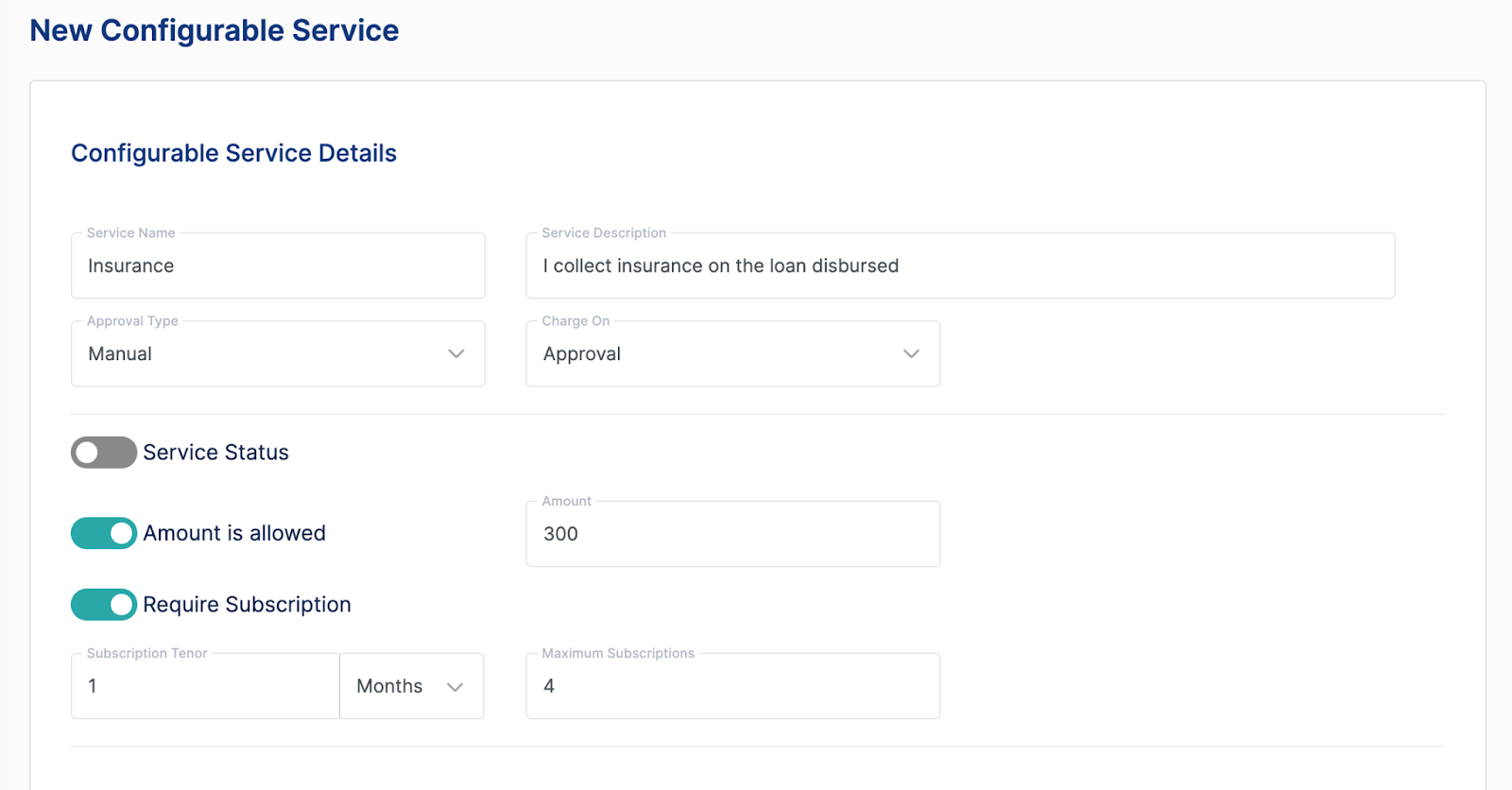
This includes the name of the service, a description explaining its function, the approval type, and its operational status. These details help borrowers understand what the service provides and establish how requests will be managed internally.
For example, a service titled “Rent Reporting Support” may include a description explaining eligibility criteria and reporting timelines. Clear naming and descriptions reduce confusion and improve the borrower experience.
Approval settings are equally important because they determine whether requests require manual review, automated approval, or additional internal verification.
Workflow actions
Configurable services also allow lenders to define actions that occur after form submission or approval.
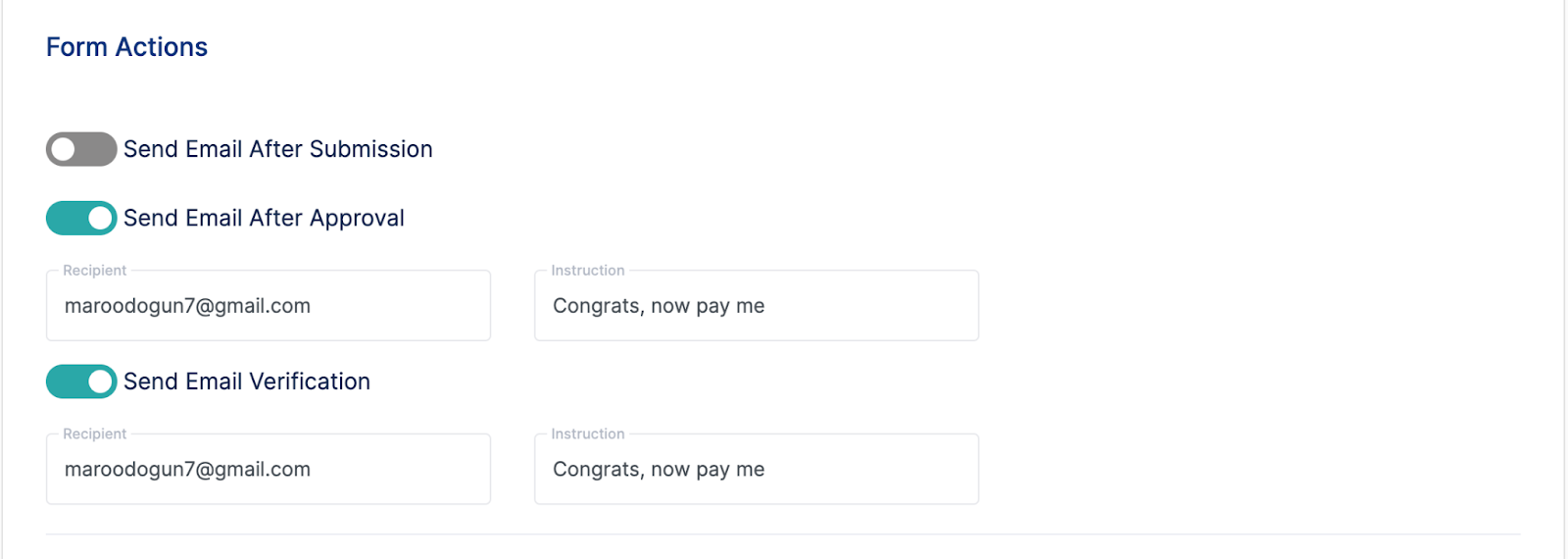
For example, lenders may configure automatic email notifications to confirm successful submissions, notify borrowers about approval decisions, or provide next steps following request completion.
These workflow actions improve communication and reduce uncertainty for borrowers by keeping them informed throughout the process.
For operational teams, automated actions also reduce manual effort by streamlining repetitive administrative tasks.
Custom forms
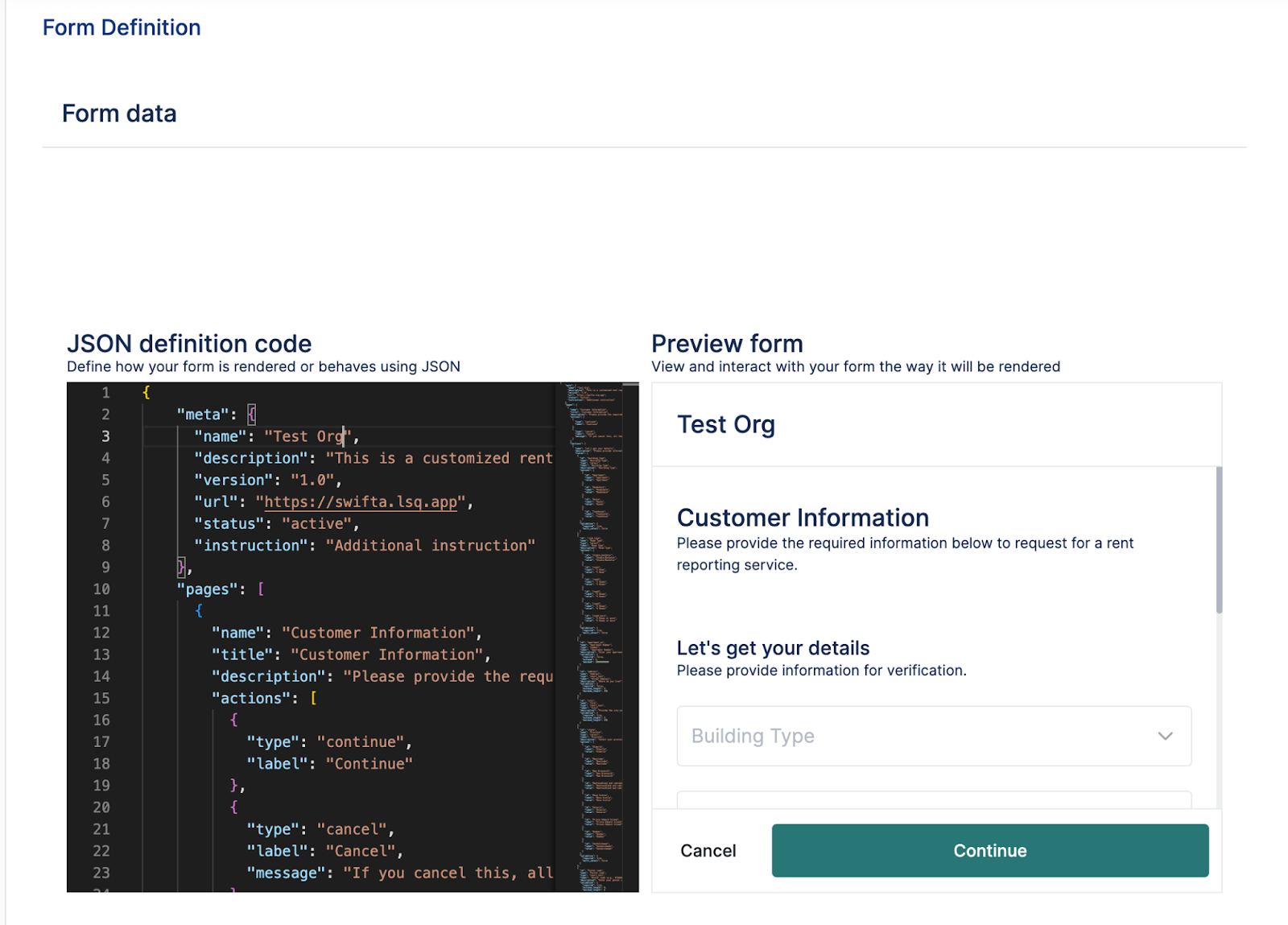
Another important aspect of configurable services is the ability to create custom forms using JSON Logic Configuration.
This functionality enables lenders to collect information specific to the service being offered. Rather than using generic forms for every request, organizations can tailor fields to gather only relevant information.
For example, an insurance request workflow may require policy information, supporting documents, and preferred coverage details. A utility payment request may instead require billing information, account numbers, and payment deadlines.
This flexibility improves efficiency by ensuring teams collect meaningful information from the start.
To learn more about Lendsqr’s custom forms, check out our help guide on Introduction to Lendsqr’s Custom Form Builders.
How to create a configurable service
Creating a configurable service in Lendsqr is designed to be straightforward. Once administrators understand the workflow requirements, setup can typically be completed in a few steps.
Step 1: Navigate to configurable services
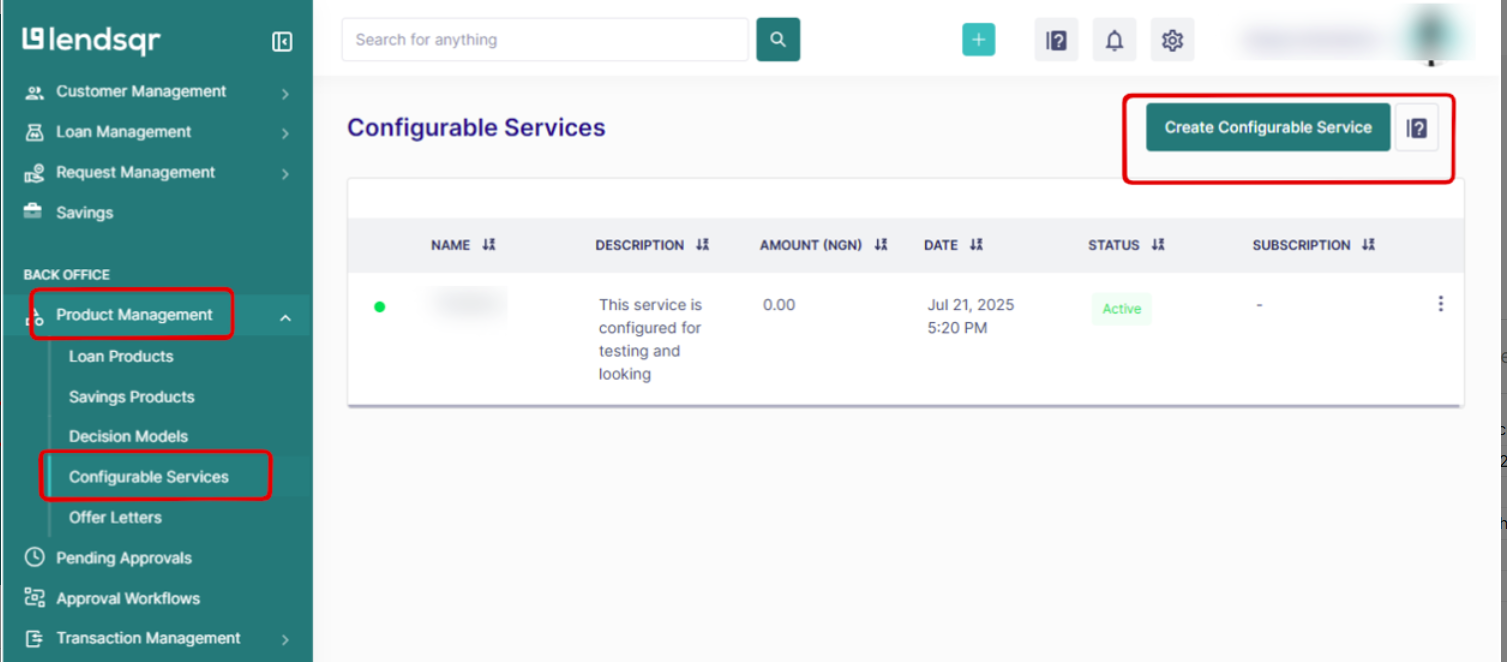
Begin by logging into the Lendsqr admin console.
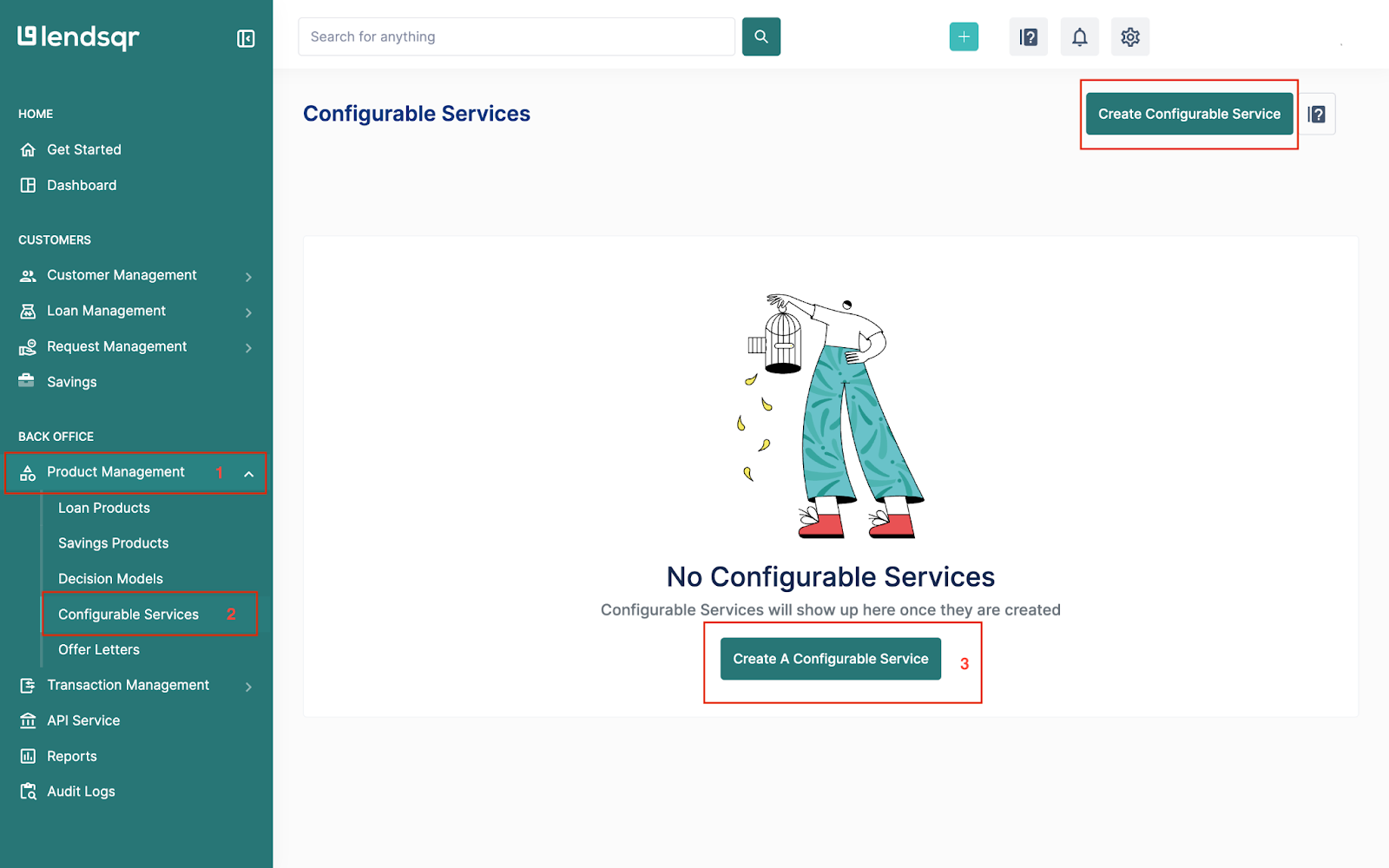
Using the side navigation menu, scroll to the Back-Office section and locate the Product Management module. Within this area, select the Configurable Services tab.
This section acts as the management center for creating, reviewing, and maintaining lender-defined workflows.
Before proceeding, administrators should confirm they have appropriate access permissions to create or edit services.
Step 2: Start service creation
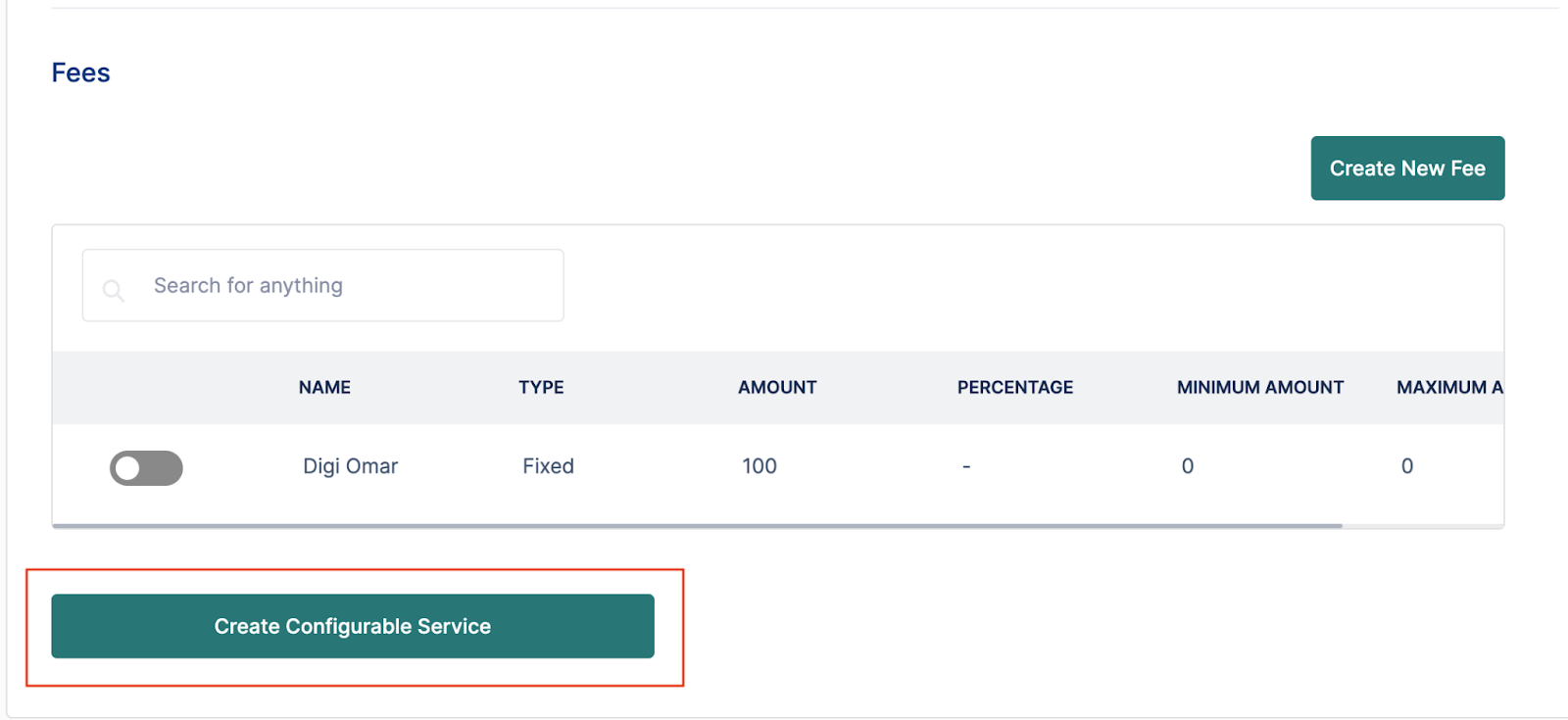
Once inside the configurable services page, click the Create A Configurable Service button.
This button may appear either at the center of the screen or at the top right-hand corner, depending on the current interface view.
Selecting this option opens the service creation workflow where lenders can begin defining service requirements.
Step 3: Enter service details
The next step involves providing essential information about the service you want to create.
Input details such as the service name, description, approval type, and operational status. These details establish the structure and behavior of the service.
It is helpful to write descriptions clearly and avoid vague wording. Borrowers should understand the purpose of the service and what information may be required before submitting requests.
Approval settings should also align with operational policies. High-risk or financially sensitive services may require additional review, while lower-risk requests may support faster approval paths.
Step 4: Define workflow actions
After entering service details, proceed to specify actions that should occur after form submission or approval.
For example, lenders may configure email notifications to acknowledge submissions or communicate approval decisions. This helps borrowers remain informed while reducing uncertainty around request timelines.
Carefully planning workflow actions can improve operational efficiency and create a smoother borrower experience.
Step 5: Build the custom form
Next, design and input the service form using the JSON Logic Configuration system.
This stage determines what information borrowers must provide to complete requests. Since every service may require different data, thoughtful form design is essential.
Organizations should focus on collecting only necessary information. Overly complex forms may discourage submissions, while incomplete forms may delay internal processing.
Testing forms internally before launch can help identify unclear instructions or missing fields.
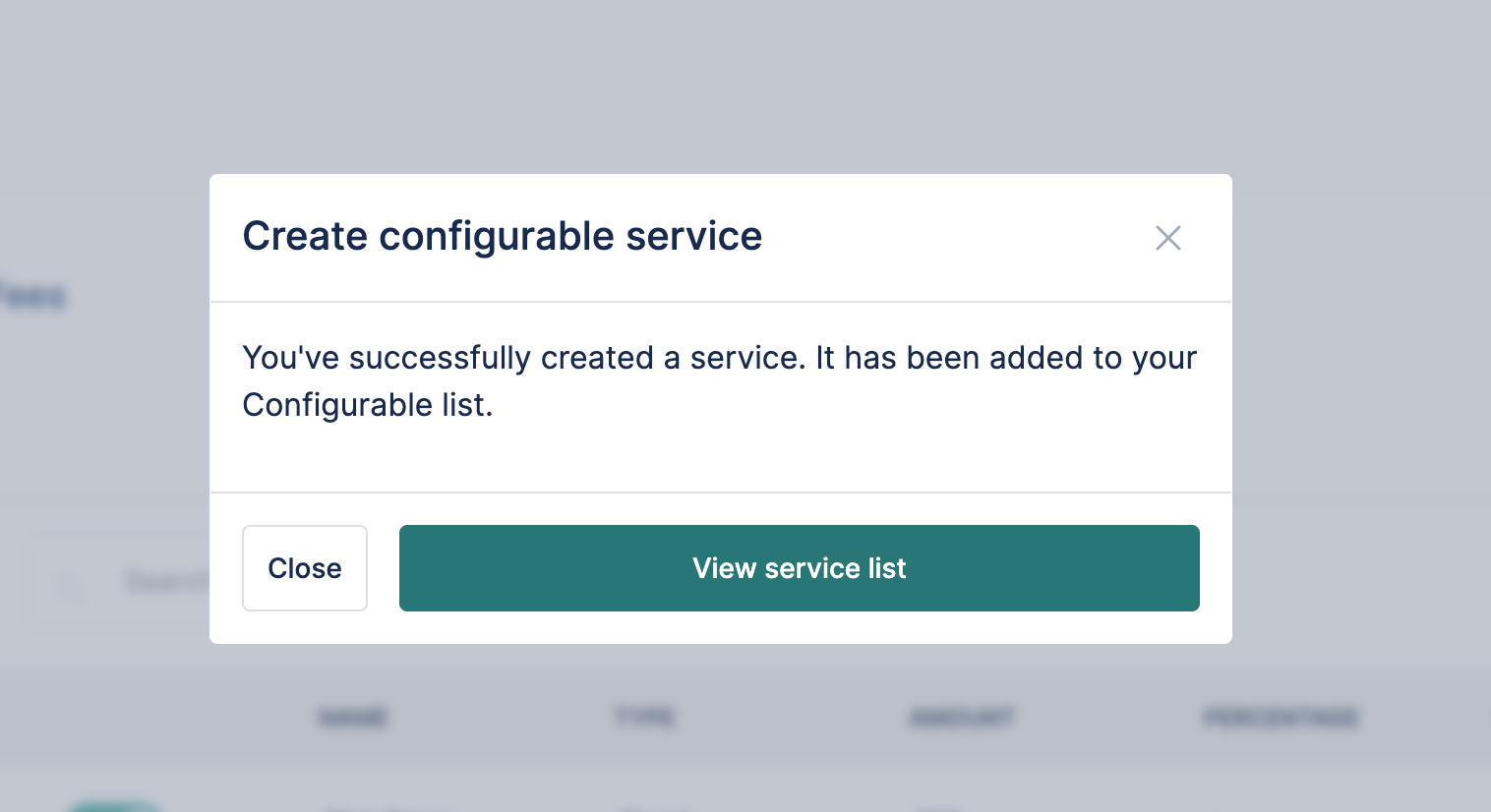
After reviewing all settings and configurations, click Create to finalize the configurable service.
Once submitted, a dialog box appears shortly afterward to confirm that the service has been created successfully.
At this stage, lenders can begin managing the service and monitoring borrower requests through the platform.
Common mistakes to avoid when creating configurable services
Although configurable services are highly flexible, poor planning can reduce effectiveness.
One common mistake is creating overly complicated workflows. Borrowers are less likely to complete requests if forms are unnecessarily long or difficult to understand.
Another issue involves unclear service descriptions. When borrowers do not understand eligibility requirements or expectations, support requests often increase.
Organizations should also avoid creating approval processes without operational alignment. Services requiring manual reviews should have clear ownership and response timelines to avoid delays.
Finally, lenders should test services before making them publicly available. Internal testing helps identify usability issues and ensures workflows function as intended.
Best practices for managing configurable services
The most effective lenders approach configurable services strategically rather than treating them as one-time setups.
Organizations should periodically review service performance to determine whether borrowers actively use available workflows. Low engagement may indicate unclear communication or poor service-market fit.
Forms should remain simple and focused, collecting only the information necessary for decision-making. Simplicity often improves completion rates and customer satisfaction.
It is equally important to review approval workflows regularly to ensure they align with changing operational priorities.
As borrower expectations continue to evolve, configurable services provide lenders with an opportunity to offer more personalized and value-driven experiences. By thoughtfully designing workflows, maintaining clear communication, and regularly reviewing service performance, lenders can strengthen customer relationships while creating more flexible operational systems.