Access your Back Office at your fingertips.
Download the app now on Google Play Store.
Scan the QR code
You can also scan QR code with your phone to download the app.
How users can complete their abandoned loans
Updated
On this page
Introduction
When a user starts a loan application but does not complete it, that application is recorded as an abandoned loan. Lendsqr’s abandoned loan recovery feature automatically detects these incomplete applications and prompts users to return and finish them, without any configuration required on your end. It works out of the box.
This matters more than it might seem. Incomplete loan applications represent real revenue that slips through the cracks. A user who got as far as receiving an offer was already interested, and often the only thing standing between them and disbursement is a nudge at the right moment. By recovering abandoned loans, lenders increase conversion rates, reduce drop-off, and give users a frictionless experience that builds trust over time.
This guide explains how the feature works, what your users experience at each stage, and what you can do to maximise recovery rates.
The loan offer screen, the automated recovery email, the offer-review resume screen, and the web app Loans page (steps 2-5 below) could not be recaptured for this update: reaching them requires completing the web app’s phone-OTP signup flow, which this environment cannot complete without a real phone number to receive the code. The step-by-step descriptions below reflect the documented flow; the entry point screenshot above and the admin-console screenshot further down have been verified live.
Why loan abandonment happens
Users abandon loan applications for many reasons: distractions, uncertainty about the offer terms, poor connectivity, or simply needing more time to decide. In most lending systems, these users are lost entirely and must start over from scratch if they return.
Lendsqr’s abandoned loan recovery changes that. Once a loan application is flagged as abandoned, the system automatically contacts the user with a prompt to continue from where they stopped. No manual intervention is needed from the lender.
What counts as an abandoned loan: Any loan application where the user received an offer (the “Take this Offer” stage) but did not proceed to accept or complete it. Once the user exits at or after that point, the system automatically sets the loan status to Abandoned.
How users can complete their abandoned loans
Step 1: User starts a loan application
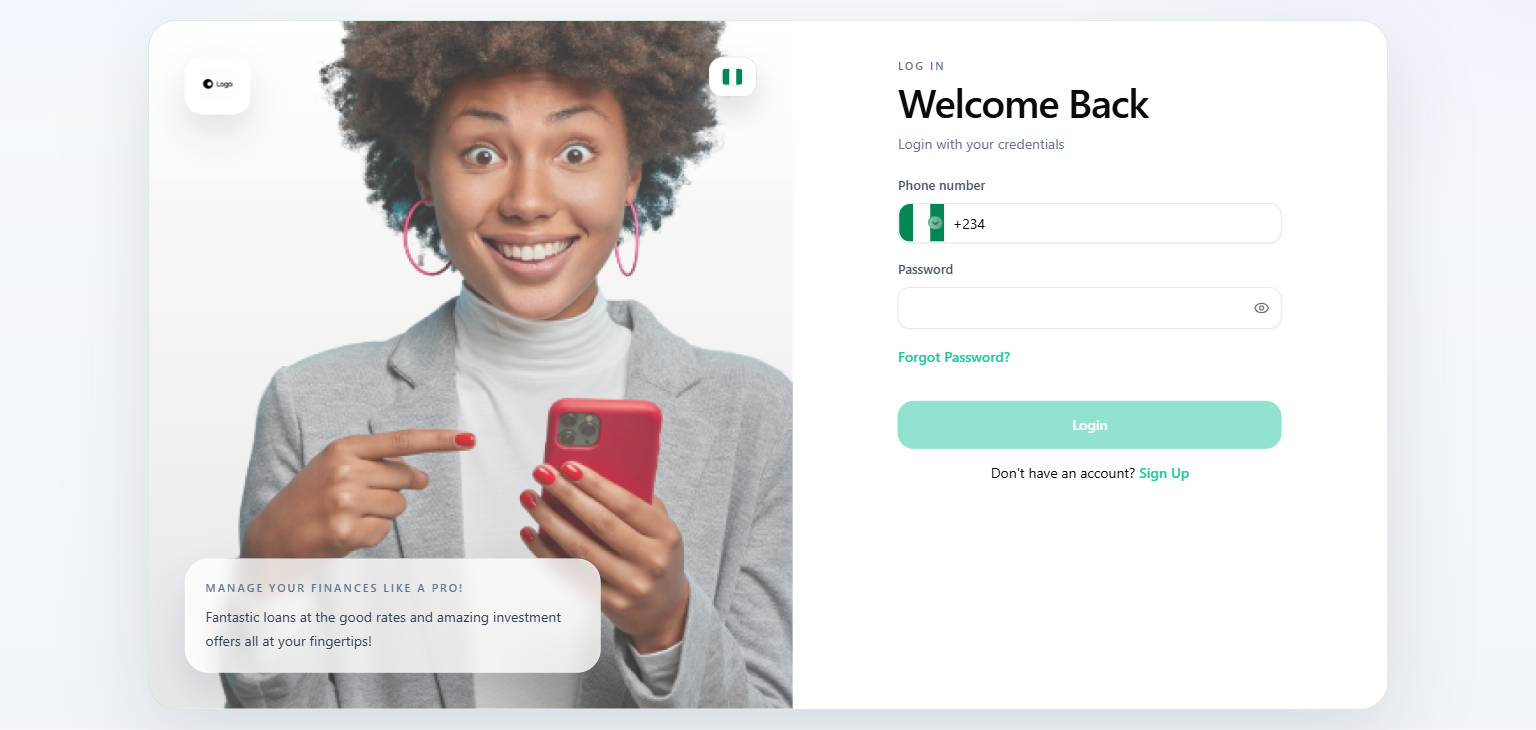
The user logs into your web app and begins a loan application. Your web app link is accessible from the Lendsqr Admin Console and can be shared with your users directly.
The web app login screen, the entry point to the loan application flow
Step 2: User receives an offer but does not complete the application
If the user reaches the loan offer stage but exits without accepting, the system registers the application as abandoned.
The loan offer screen. Exiting at this point or after triggers the abandoned loan status.
Step 3: User receives a recovery email
Lendsqr automatically sends the user an email prompting them to return and complete their loan application. This email is triggered by the system with no action required from the lender.
The automated recovery email sent to the user
Step 4: User clicks through to resume the application
Clicking the button in the email redirects the user to their web app, where they can review the offer and choose to accept or decline.
The offer review screen where users resume their application
Step 5: User accepts or declines the offer
Accept Offer: The user continues from where they stopped and completes the loan application.
Decline Offer: The loan application is cancelled. The user is free to apply for a new loan at any time.
Alternatively, users can access their abandoned loan directly from the Loans page on the web app, without going through the email link.
Abandoned loans are also accessible directly from the web app loans page
What lenders need to do
Nothing, for the core feature. Abandoned loan detection and recovery emails are enabled by default on all Lendsqr-powered platforms. There is no toggle to switch on, no email template to configure, and no threshold to set. As long as your web app is live and users are going through the loan flow, the system handles recovery automatically.
What you can do to improve outcomes is covered in the section below.
Tips for improving recovery rates after abandonment
While the system runs automatically, there are practical steps lenders can take to increase the share of abandoned loans that convert:
1. Keep your loan offer terms competitive
Users who abandon after seeing an offer may have found the terms unfavourable. Review your offer configuration periodically, especially interest rates and repayment schedules, to ensure they reflect your target borrower’s expectations.
2. Follow up through other channels where possible
Reach out to the customer through other available channels such as SMS, phone calls, or in-app messaging. A direct, personal touchpoint is often more effective than an automated email and can be the deciding factor in getting a user to complete their application.
3. Monitor abandonment rates in your admin console.
Track which stages of the loan flow see the highest drop-off. If users are consistently abandoning before even reaching the offer stage, the issue may be in your onboarding flow or data requirements, not in the recovery process itself.
Frequently Asked Questions
Does the lender need to configure anything to enable this feature? No. Abandoned loan recovery is enabled by default. It requires no setup or configuration from the lender.
How soon does a user receive the recovery email after abandoning a loan? The email is sent automatically once the system detects that a loan has been abandoned. Timing is handled by the platform.
Can a user apply for a new loan while they have an abandoned one? Yes. If the user declines the offer on the recovery screen, the abandoned application is cancelled and they can start a fresh application immediately.
What if the user ignores the recovery email? The abandoned loan remains in that status. Users can still return to it from the Loans page on the web app at any point, as long as the offer has not expired.
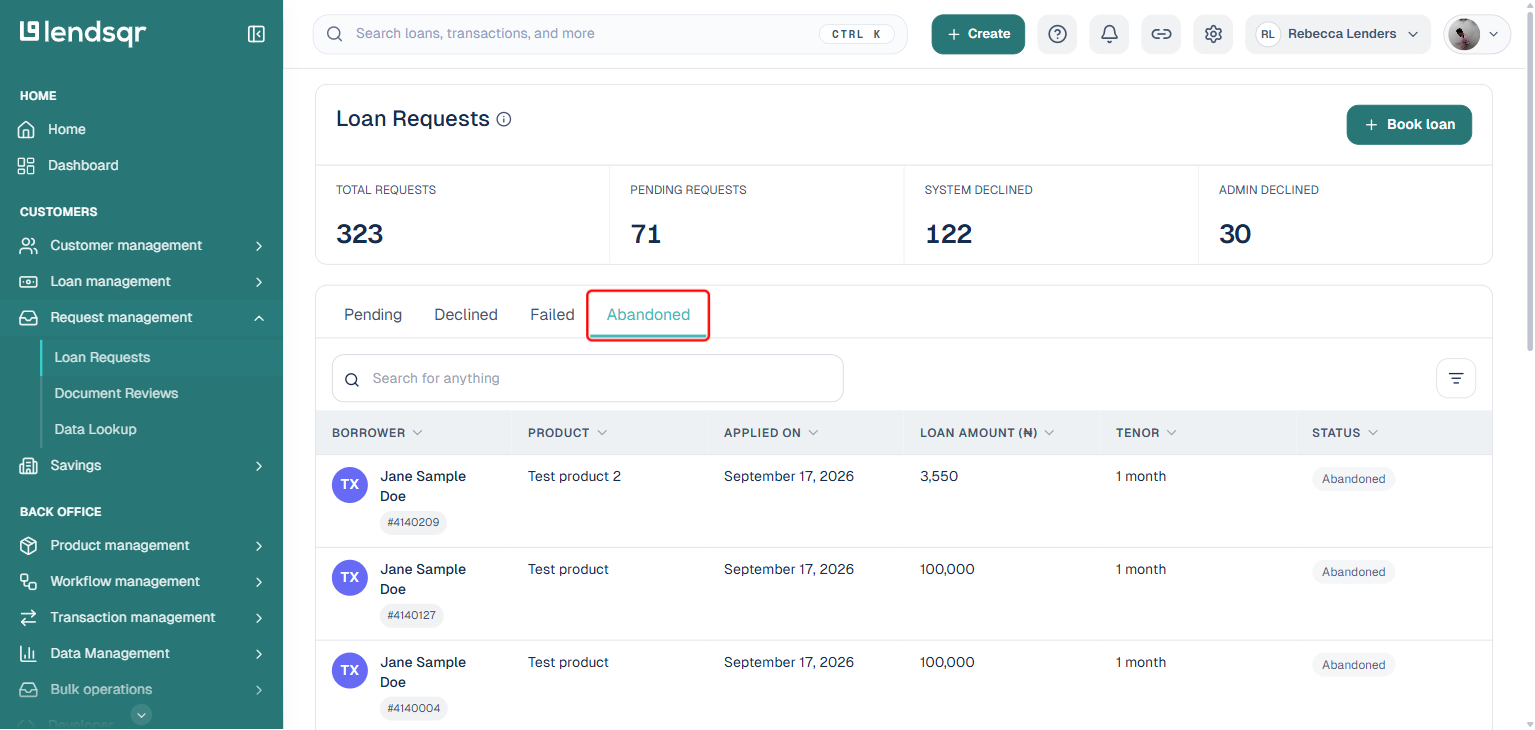
Can the lender see which loans are abandoned from the admin console? Yes. Loan statuses, including abandoned ones, are visible in your Lendsqr Admin Console under the request management module.
Summary
Abandoned loan recovery is a passive but high-value feature built into every Lendsqr-powered lending platform. It catches users who were close to completing a loan and gives them a direct path back, automatically. Lenders benefit from higher conversion with no added operational overhead.