Access your Back Office at your fingertips.
Download the app now on Google Play Store.
Scan the QR code
You can also scan QR code with your phone to download the app.
How to configure referrals for your users
Updated
On this page
The referral configuration section allows lenders to design and manage referral programs within their lending platform. This feature enables lenders to incentivize existing users to invite new borrowers by offering rewards tied to specific actions or milestones. A well-configured referral system can support user acquisition, improve engagement, and encourage transactional activity across the platform.
The referral configuration page provides a structured overview of all created referral rules. Each configuration defines how and when rewards are triggered, who benefits, and the limits attached to those benefits. Understanding each field is essential to ensuring that referral campaigns align with business objectives and operational policies.
Overview of referral configuration fields
Each referral configuration is displayed across several columns. These fields collectively define how the referral program operates.
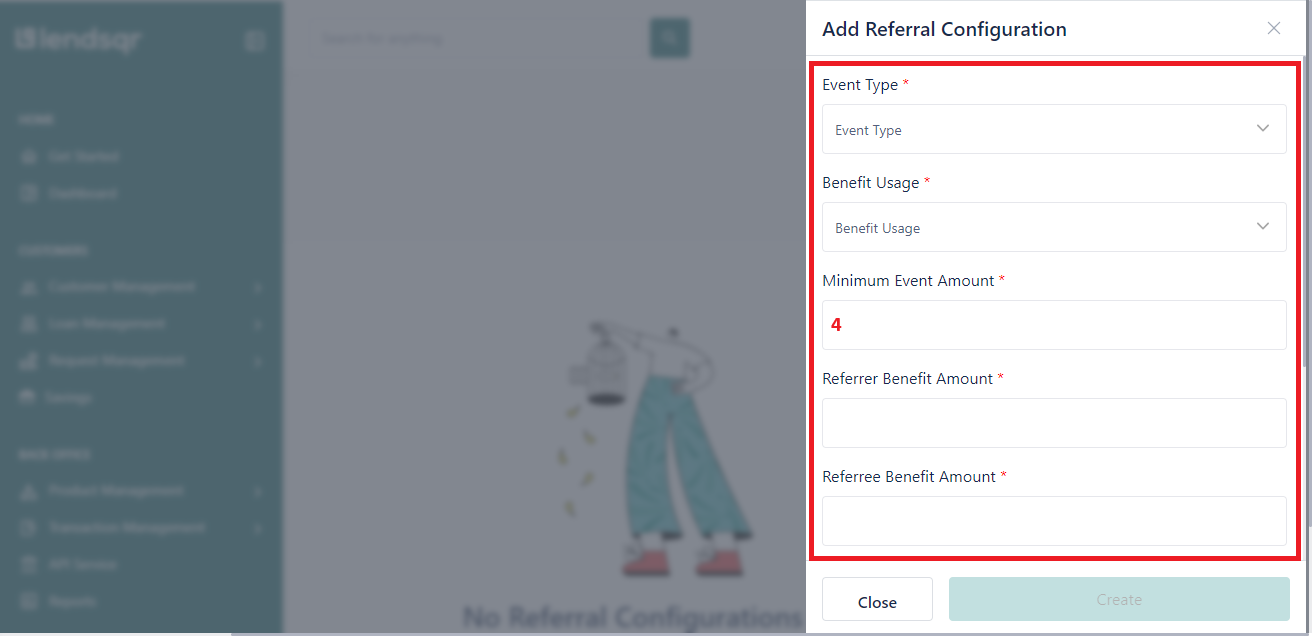
Event type This specifies the exact point in the borrower journey when a referral becomes valid. It determines the trigger condition for issuing referral benefits. Available options typically include actions such as sign up, loan application, loan payment, loan funding, loan repayment, bill payment, airtime top-up, or loan decline.
For example, if the event type is set to loan approval, the referrer will receive a reward only when the referred user successfully has their loan approved. This allows lenders to tie rewards to meaningful business outcomes rather than just user registration.
Benefit usage This defines how the referrer can use the reward they receive. The system provides predefined options such as paying bills, making transfers, or lending funds within the platform.
This field ensures that referral rewards remain within the ecosystem, encouraging continued platform usage rather than immediate withdrawal. It also allows lenders to guide user behavior in line with their service offerings.
Minimum event amount This sets the minimum transaction value that must be completed by the referred user before the referral reward is activated.
For instance, if the minimum event amount is set to 50,000 NGN under a loan disbursement event, the referred user must receive a loan equal to or greater than that amount before the referrer becomes eligible for the reward. This helps prevent abuse and ensures that only valuable transactions trigger incentives.
Referrer benefit amount This indicates the reward given to the user who initiated the referral. It is usually defined as a fixed monetary value.
This amount should be carefully calibrated to balance user motivation and business cost. Offering too little may not drive engagement, while offering too much may reduce profitability.
Referee benefit amount This defines the reward given to the newly referred user. Providing a benefit to both parties often increases the likelihood of successful referrals, as it creates a mutual incentive.
For example, a new borrower may receive a welcome bonus that can be used to offset platform fees or transactions.
Referrer event limit This specifies how many times a referrer can receive benefits from the same event type. Once this limit is reached, additional qualifying actions from referred users will not generate further rewards for the referrer.
This control helps manage financial exposure and prevents excessive reward accumulation from a single user.
Referee event limit This defines how many times the referred user can benefit from the same referral configuration. After reaching this limit, the referee will no longer receive rewards tied to that event.
This ensures that incentives are used as an onboarding or engagement tool rather than a recurring subsidy.
Duration This determines how long the referral configuration remains active. It is typically defined in days from the time the configuration is created or activated.
After the specified duration expires, the referral rule is automatically deactivated and no longer applies to new or ongoing referral activities.
How referral configuration works in practice
To better understand how these fields interact, consider a simple example.
A lender creates a referral configuration with the following setup:
Event type: loan disbursement
Minimum event amount: 100,000 NGN
Referrer benefit: 5,000 NGN
Referee benefit: 2,000 NGN
Referrer event limit: 10
Referee event limit: 1
Duration: 30 days
In this case, when a user refers a new borrower, the following conditions apply:
The new borrower must receive a loan of at least 100,000 NGN
Once this condition is met, the referrer earns 5,000 NGN
The referred borrower receives 2,000 NGN as a bonus
The referrer can earn this reward up to 10 times within the campaign period
The referee can only benefit once from this configuration
The entire setup expires after 30 days
This structured approach allows lenders to align referral incentives with measurable outcomes such as loan volume or repayment behavior.
Steps to enable referral configuration
Setting up a referral configuration is straightforward and can be done through the admin console. Follow the steps below:
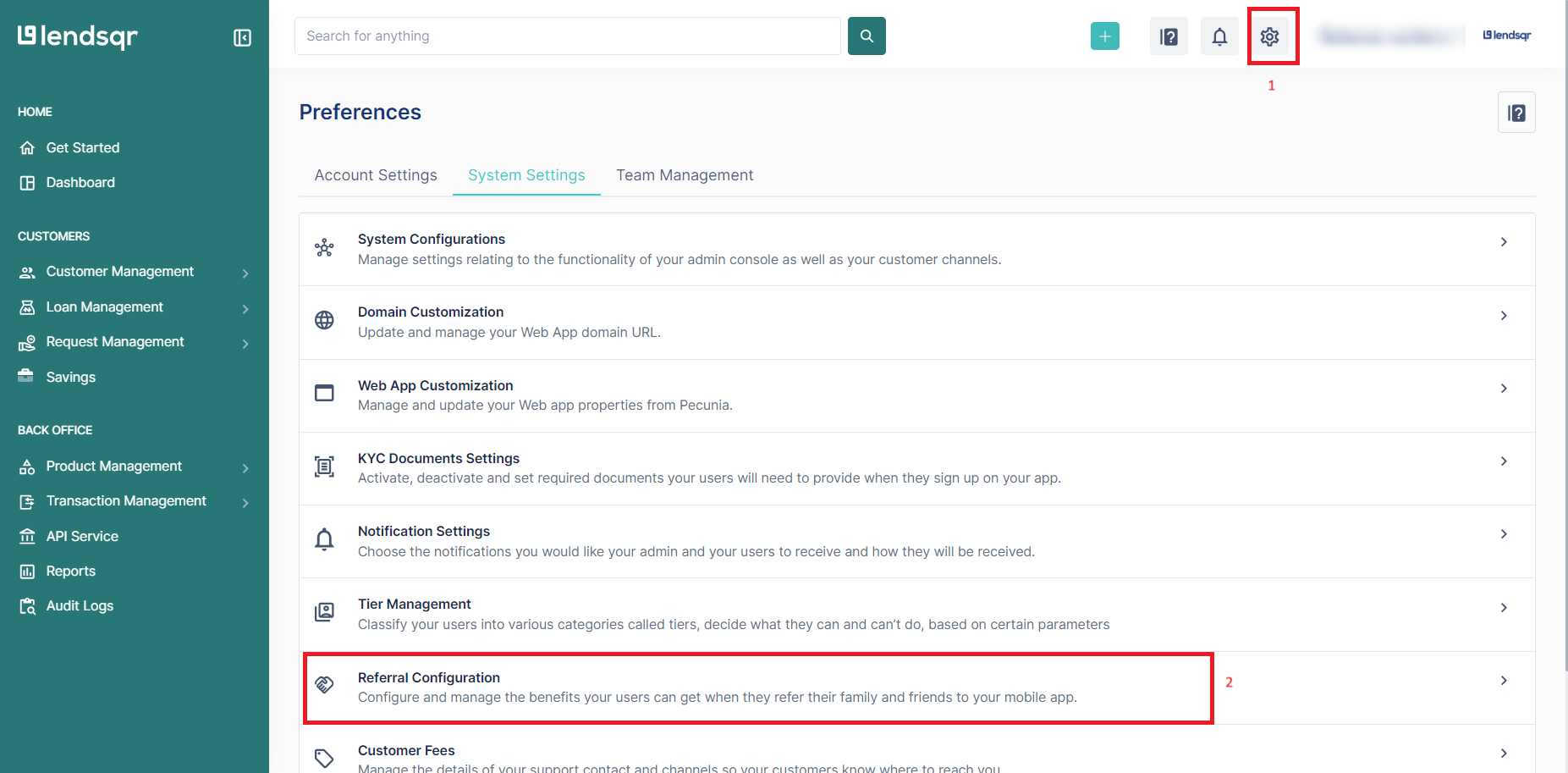
1. Log into the admin console and click on the settings icon at the top right corner of your screen
2. Click on the “System Settings” tab, and then click on “Referral Configuration“
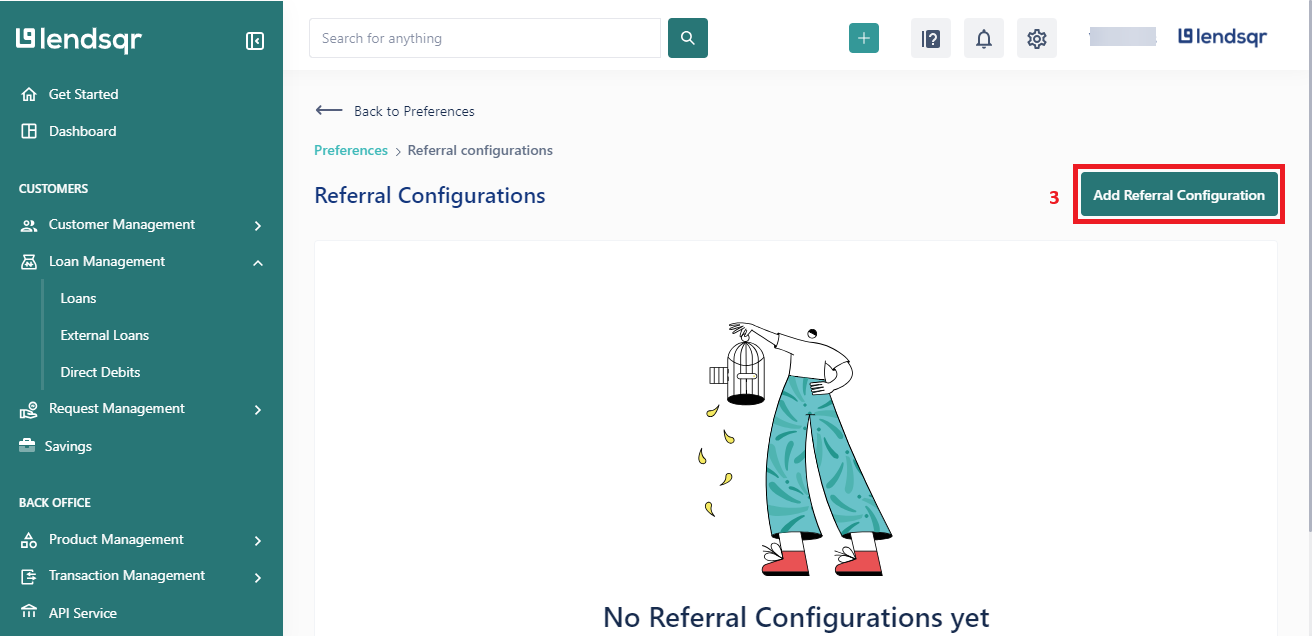
3. Go ahead to click on the “Add Referral Configuration” button, and fill in the required details. Finally, click on the “Create” button
Once created, the configuration will appear in the referral configuration table, where it can be monitored or adjusted as needed.
To maximize the effectiveness of your referral program, consider the following guidelines:
Align rewards with business goals. Choose event types that reflect meaningful user actions, such as loan disbursement or repayment, rather than just sign-ups.
Set realistic minimum thresholds. This ensures that rewards are tied to valuable transactions and reduces the risk of misuse.
Balance incentives carefully. Rewards should be attractive enough to motivate users but sustainable for the business.
Apply reasonable limits. Event limits help control costs and prevent excessive exploitation of the referral system.
Define a clear duration. Time-bound campaigns create urgency and allow for periodic evaluation and adjustment.
Monitor performance regularly. Track how users respond to referral campaigns and refine configurations based on data insights.
Operational considerations
When implementing referral configurations, it is important to consider how they interact with other parts of the platform. Referral rewards may affect wallet balances, transaction flows, and user engagement metrics. Ensure that internal processes such as accounting, fraud monitoring, and reporting are aligned with the referral logic.
It is also advisable to communicate referral terms clearly to users. Transparency around eligibility criteria, reward conditions, and limits helps build trust and reduce disputes.