Access your Back Office at your fingertips.
Download the app now on Google Play Store.
Scan the QR code
You can also scan QR code with your phone to download the app.
Top 10 reasons the Lendsqr system automatically declines loans
Updated
On this page
Understanding why loan requests are declined in Lendsqr
Lendsqr’s system automates loan request management by filtering applications, prioritizing high-quality borrowers, and handling complex risk decisions on behalf of lenders. This ensures speed, consistency, and strong risk control across lending operations.
However, there are instances where customers may have their loan requests declined. While this can be frustrating for borrowers, these decisions are typically based on clearly defined rules within the credit risk rule.
Over time, several common reasons have been identified for why loan requests are declined. This guide explains those reasons in detail, provides real-life scenarios for better understanding, and outlines what lenders and borrowers can do in each situation.
Before diving into the reasons for decline, it is important to understand how the system works.
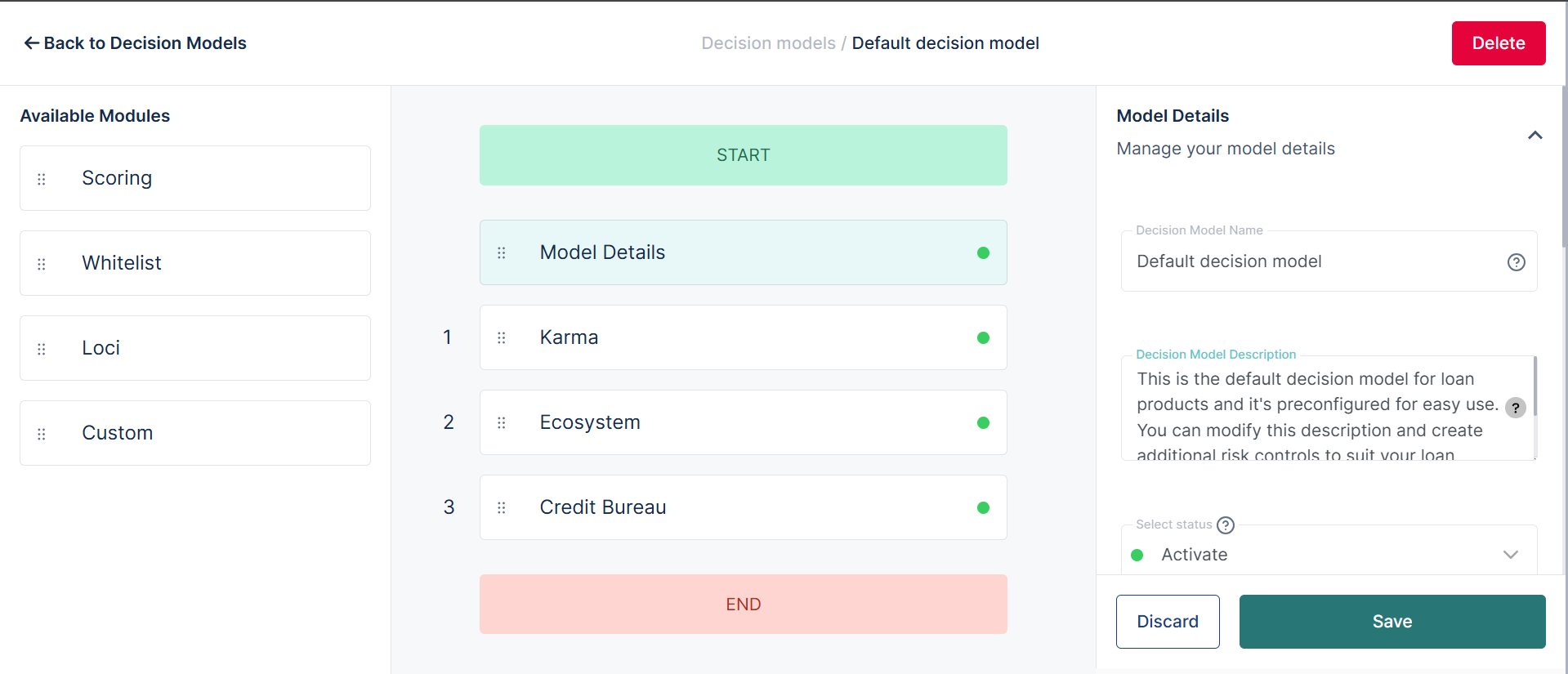
When a borrower submits a loan request, the system runs a series of checks using decision modules such as Karma, Ecosystem, Loci, Scoring, and Credit Bureau. Each module evaluates a different aspect of the borrower’s profile.
If a borrower fails any critical check, the system may automatically decline the request based on the configured credit risk rule.
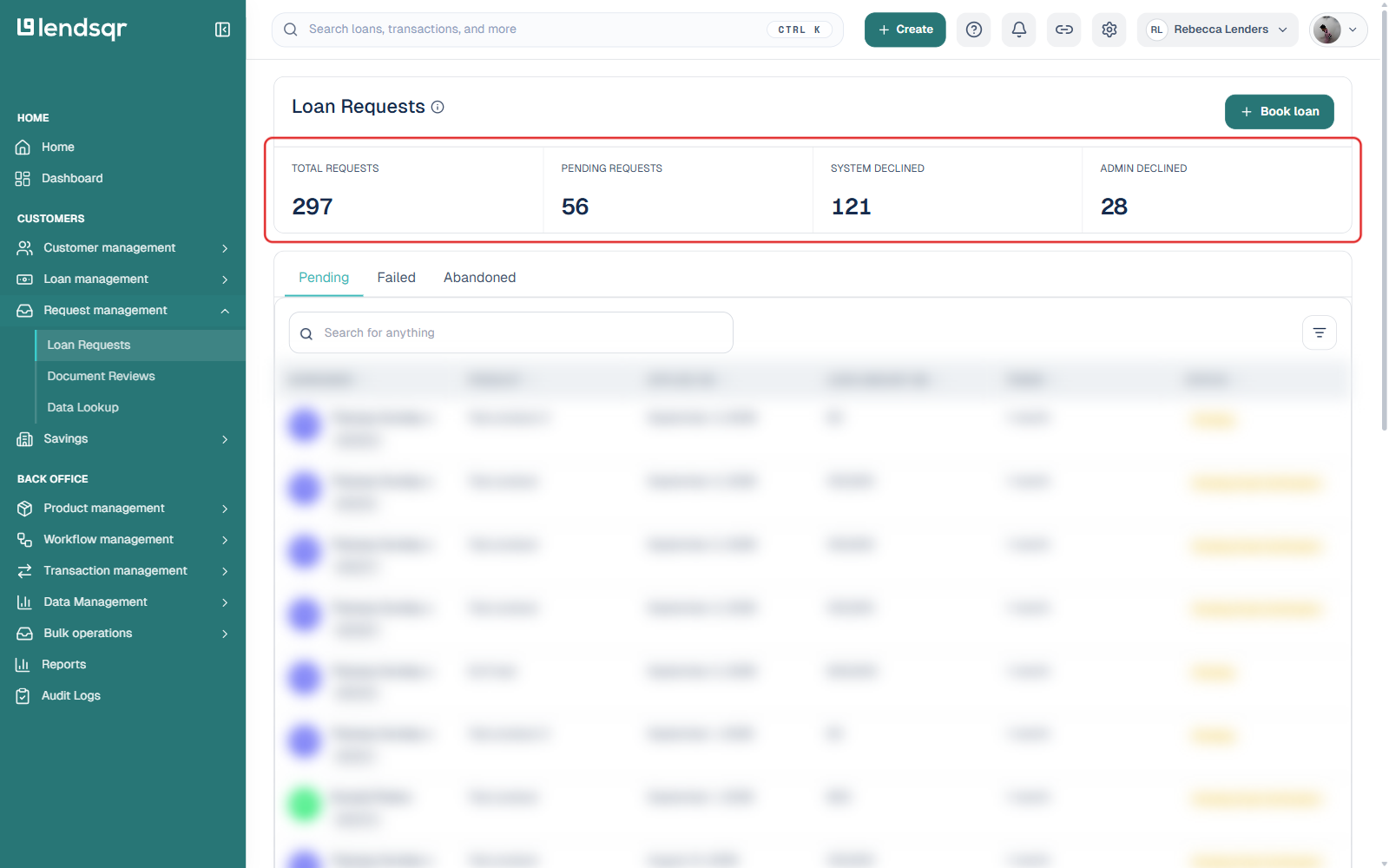
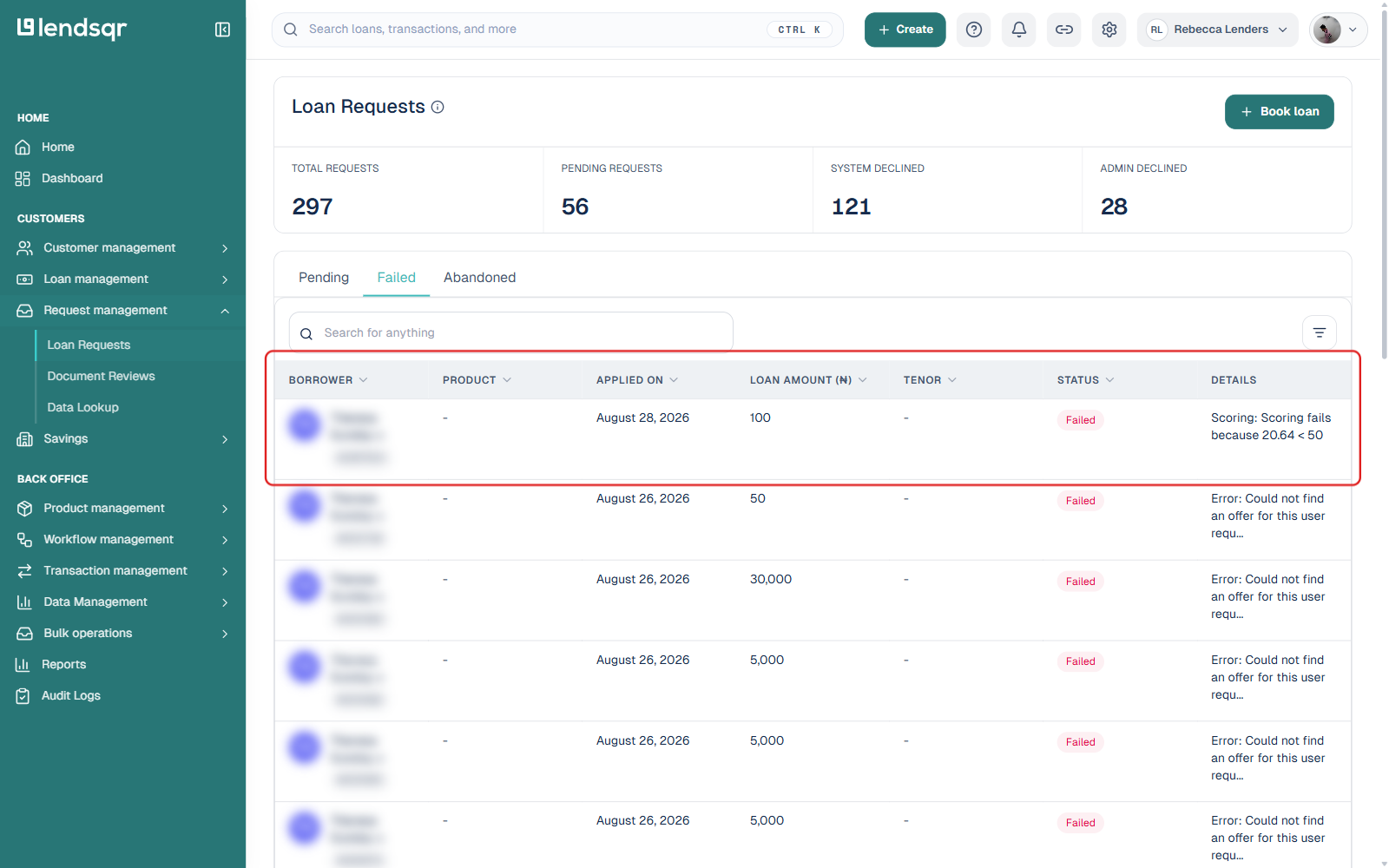
Declined requests are tracked separately from requests still pending a decision. The Loan Requests page shows a running count of requests declined automatically by the system versus those declined manually by an admin, and the Failed tab lists the specific reason each request could not go through, such as a scoring failure or a missing offer, right next to the request.
Common reasons for loan request decline
The customer is found in the Karma blacklist system
The system checks borrower details such as phone number, BVN, email, and IP address against the Karma blacklist database. If a match is found, the request is automatically declined.
Real-life scenario: A borrower previously defaulted on a loan with another lender and was reported. When they apply for a new loan, their details match the blacklist, leading to an immediate decline.
What lenders can do: Lenders can first verify the blacklist match details to confirm accuracy. If needed, they can request supporting documentation from the borrower to validate identity or dispute the listing. In some cases, lenders may choose to route such applications into a manual review workflow instead of outright approval.
Too many failed loan requests
Lenders can set limits on how many loan requests a borrower can make within a specific timeframe. Exceeding this limit results in an automatic decline.
Real-life scenario: A borrower repeatedly applies for loans within a short period, attempting to find a product that approves them.
What lenders can do: Lenders can adjust request frequency limits based on user segments. Another option is to guide the borrower toward a more suitable product rather than allowing repeated failed attempts.
Previously declined by the lender
If a borrower was previously declined and their situation has not changed, the system can prevent them from reapplying.
Real-life scenario: A borrower was declined due to insufficient income and reapplies without any updates.
What lenders can do: Lenders can review whether the borrower’s profile has changed, such as updated income or employment.
Borrower has a running/active loan
If a borrower already has an ongoing loan, taking on additional debt may increase their risk of default.
Real-life scenario: A borrower is still repaying an existing loan and applies for another.
What lenders can do: As a lender, you review the borrower’s debt-to-income ratio, showing how much income goes to debts. If the ratio is high, approving another loan increases the risk of default or financial strain.
However, if you are sure that you want to give them a loan without tampering with your settings, you are able to prequalify them for the loan.
Failed credit bureau check
Credit bureau checks evaluate a borrower’s credit history, including past loans and repayment behavior.
Real-life scenario: A borrower has multiple defaults recorded in their credit report.
What lenders can do: Lenders can use multiple credit bureaus for cross-verification, adjust credit score thresholds, or introduce risk-based pricing, where higher-risk borrowers are offered loans with stricter terms instead of being declined outright.
Borrower is credit delinquent
A borrower is considered delinquent if they have overdue payments.
Real-life scenario: A borrower has an unpaid loan past its due date.
What lenders can do: Lenders can require settlement of outstanding obligations before reapplying, offer restructuring options, or restrict access to smaller loan products until repayment behavior improves.
The borrower has paid a penalty before
A history of penalties indicates prior repayment issues.
Real-life scenario: A borrower previously paid late and incurred a penalty.
What lenders can do: Instead of outright approval, lenders can introduce probationary lending, such as offering lower amounts or shorter tenures, or track improved repayment behavior over time before granting full access again.
Failed selfie BVN verification
This check ensures identity consistency.
Real-life scenario: A borrower uploads a blurry or mismatched image.
What lenders can do: Lenders can request a re-upload with clearer instructions, introduce alternative verification methods, or escalate to manual KYC review rather than relying solely on automated checks.
Frequent employment category changes
Frequent changes suggest instability.
Real-life scenario: A borrower updates employment status multiple times within a short period.
What lenders can do: Lenders can extend the observation window, require additional proof of employment, or adjust thresholds based on specific borrower segments such as freelancers or gig workers.
Frequent income category changes
Repeated income updates indicate inconsistency.
Real-life scenario: A borrower frequently changes their reported income within a month.
What lenders can do: Lenders can request income verification documents, average income over a longer period, or introduce buffers in decision rules to accommodate variable earners.
Failed scoring
The scoring module evaluates borrower eligibility based on multiple factors.
Real-life scenario: A borrower does not meet the minimum score threshold. On the Failed tab of Loan Requests, this shows up as a plain-language reason such as “Scoring: Scoring fails because 20.64 < 50", where the request's score fell short of the product's configured minimum.
What lenders can do: Lenders can review and rebalance scoring weights, introduce alternative scoring models, or offer tiered products based on score bands instead of a strict pass or fail approach.
What lenders can do in these situations
Lenders have several options when handling declined loan requests.
They can review the request’s recorded decline reason to understand exactly why a borrower failed. This provides full transparency into the decision-making process.
Beyond prequalifying, lenders can:
Adjust credit risk rule thresholds
Introduce manual review layers for edge cases
Create alternative loan products for borderline borrowers
Implement risk-based pricing or reduced loan offers
Require additional verification before approval
These approaches allow lenders to maintain control while still accommodating valid borrowers.
What borrowers should do if they believe they meet all requirements
There may be cases where borrowers believe they meet all the necessary criteria but still have their loan request declined.
In such situations, the borrower should reach out directly to the lender. Only the lender has access to the recorded decline reason and can provide clarity on the specific reason for the decline.
The lender can review the borrower’s profile, check the recorded decline reason, and determine whether the decline was accurate or if further action is required.
If necessary, the lender may request additional information, suggest corrective steps, or guide the borrower toward a more suitable loan option.
Common errors and how to fix them
One common issue is misinterpreting the recorded decline reason. Always review the exact module responsible for the decline.
Another issue is overly strict decision settings. Regularly review thresholds to ensure they align with your risk appetite.
Lack of alternative pathways is also a problem. Relying only on approval or decline limits flexibility. Introduce structured fallback options such as smaller loans or manual review.
Best practices for managing loan declines
Use recorded decline reasons consistently to guide decisions and avoid guesswork.
Build flexibility into your system by designing multiple pathways for different borrower profiles.
Continuously monitor model performance and refine rules based on real outcomes.
Communicate clearly with borrowers to maintain trust and transparency.
Conclusion
Loan request declines in Lendsqr are driven by structured credit risk rules designed to protect lenders and ensure responsible lending.
By going beyond prequalifying and introducing alternative decision strategies, lenders can maintain strong risk controls while improving approval opportunities for deserving borrowers.
For borrowers, reaching out to their lender remains the best course of action if they believe a decision was incorrect.