Access your Back Office at your fingertips.
Download the app now on Google Play Store.
Scan the QR code
You can also scan QR code with your phone to download the app.
Understanding your wallet transactions on Adjutor
Updated
On this page
Managing financial visibility is essential when working with APIs and digital infrastructure. For organizations using data and verification services, maintaining a clear understanding of wallet balances, transaction history, and service-related charges helps ensure uninterrupted operations and better financial control.
Within Adjutor, the Wallet Transaction page provides users with a centralized overview of account-related financial activity. It allows account holders to monitor wallet balances, review debits resulting from API calls, access wallet funding information, and track transactions performed on the account over time. This visibility helps businesses maintain operational continuity by ensuring sufficient funds are always available for API usage.
Since API calls within Adjutor are charged directly from the wallet, understanding how the wallet transaction system works becomes especially important for teams relying on uninterrupted access to verification services and lending infrastructure.
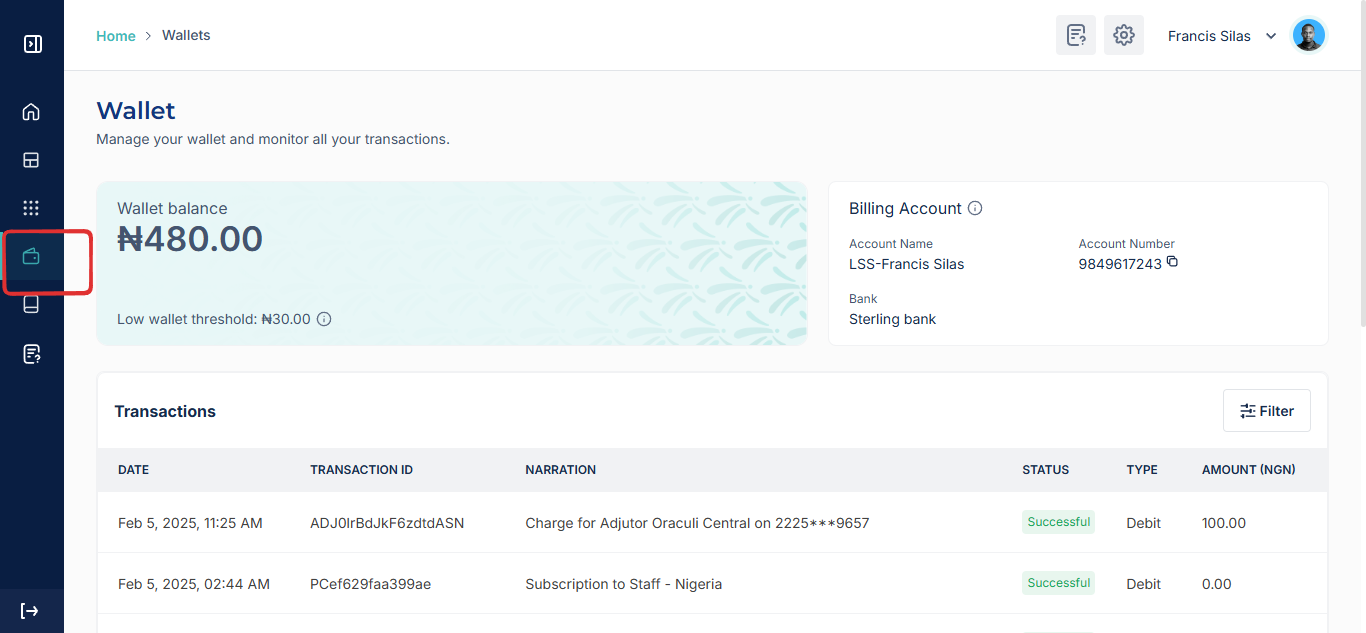
The Wallet Transaction page serves as the financial activity hub within Adjutor. It provides users with a comprehensive view of wallet activity by displaying account balances, funding details, and a record of transactions affecting the wallet.
Rather than manually tracking usage or estimating charges, users can access a single location to review all wallet-related activities. This transparency becomes especially valuable for organizations processing high API volumes or managing multiple verification workflows.
For example, a lending business conducting hundreds of verification requests daily may experience frequent wallet deductions. Without proper visibility into transactions, teams may struggle to understand spending patterns or identify when wallet balances are running low. The Wallet Transaction page addresses this challenge by presenting real-time financial information in a structured and accessible format.
At a practical level, this page supports financial oversight, budgeting, and service continuity by helping users monitor how funds move in and out of the wallet.
Why wallet visibility matters
Financial transparency is particularly important for businesses relying on API infrastructure.
Since Adjutor deducts charges directly from the wallet whenever API requests are made, maintaining awareness of available funds helps organizations avoid service interruptions. If wallet balances become depleted unexpectedly, access to critical API services may be delayed or interrupted, affecting customer onboarding, identity verification, fraud detection, or compliance workflows.
For example, a digital lender processing borrower verification requests during peak business hours may experience delays if the wallet balance falls below required levels. Monitoring wallet activity proactively helps reduce the likelihood of such disruptions.
Wallet visibility also improves financial planning. By reviewing transaction histories and API-related charges, organizations can better estimate operational expenses, identify periods of high activity, and forecast future spending requirements.
Beyond operational continuity, transaction visibility supports accountability. Teams responsible for managing budgets can quickly understand how account funds are used and ensure spending aligns with business expectations.
Components of the wallet transaction page
The Wallet Transaction page contains several important sections that help users understand account activity and manage wallet-related operations more effectively.
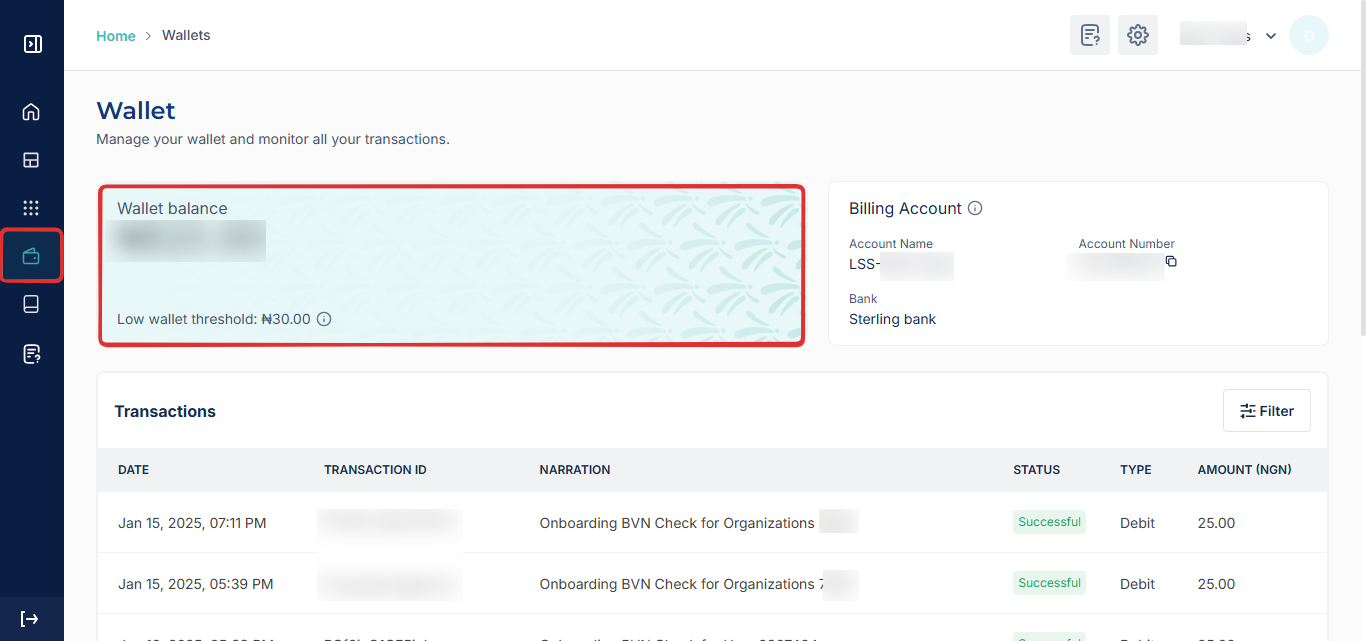
Wallet balance
The wallet balance section displays the amount currently available in your account wallet.
This figure represents the funds available for API consumption and other wallet-related activities within Adjutor. Since API charges are deducted directly from this balance, monitoring available funds regularly is important for maintaining uninterrupted access to services.
For organizations with high API usage, frequent balance checks can help prevent unexpected service disruptions. Teams may choose to establish internal monitoring processes or routine funding schedules to ensure sufficient wallet availability.
A healthy wallet balance provides operational confidence by reducing the risk of failed requests due to insufficient funds.
Funding account details
The funding account details section provides the necessary information required to add funds to your wallet.
This section typically includes the account information needed for wallet top-ups, enabling organizations to maintain adequate balances for ongoing service usage. Rather than navigating multiple systems to locate payment instructions, users can quickly access funding details directly from the wallet page.
For businesses processing high transaction volumes, maintaining a funding schedule may help improve operational consistency. For example, some organizations may choose to fund wallets weekly or monthly depending on expected API demand.
Keeping wallet balances sufficiently funded ensures continued access to Adjutor services and minimizes operational interruptions caused by insufficient funds.
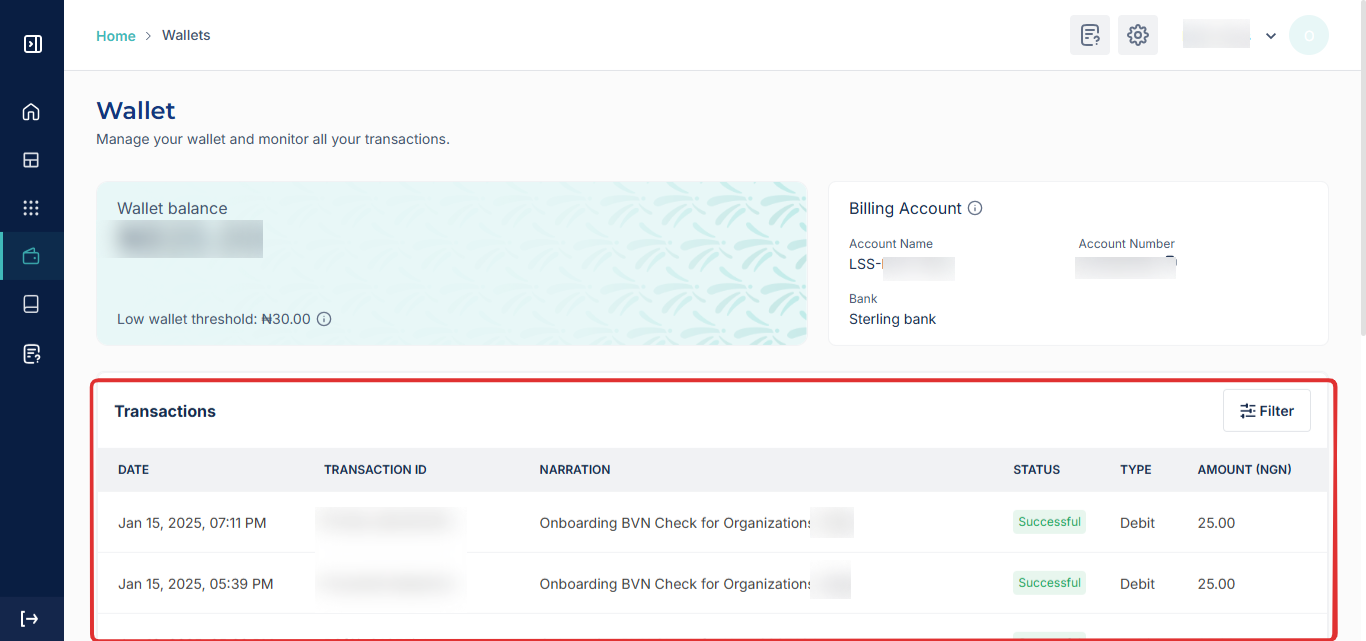
Transactions table
The transactions table offers a detailed view of wallet-related activity.
This section records transactions performed on your account, helping users understand how funds move within the wallet over time. Common entries may include wallet funding transactions and deductions resulting from API usage.
For organizations managing multiple operational workflows, this table provides valuable visibility into spending behavior. Rather than relying on assumptions about usage costs, teams can review actual transaction histories to better understand spending patterns.
The transactions table also supports easier financial tracking by allowing users to review specific account activities whenever clarification is required.
Filtering and tracking transactions
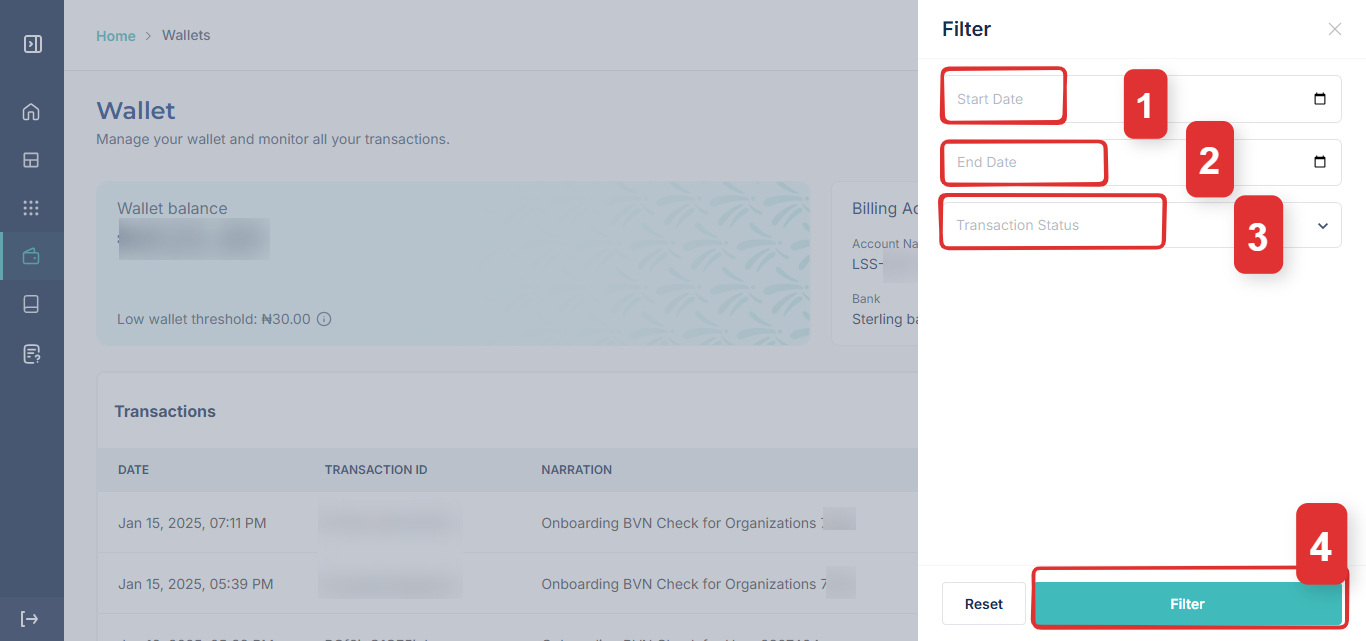
As transaction volumes increase, reviewing wallet activity manually can become time-consuming. To simplify navigation, Adjutor provides filtering capabilities within the transactions table.
Users can filter wallet transactions based on start date, end date, and transaction status. These filters make it easier to locate specific records without needing to search through extensive transaction histories.
Date filters are particularly useful when reviewing activity during a defined period. For example, a finance team preparing monthly expense reports may choose to filter transactions for a specific billing cycle to better understand API-related costs.
Transaction status filters also improve visibility. Rather than reviewing every entry individually, users can focus on completed, pending, or relevant transaction categories depending on operational needs.
These filtering capabilities help improve efficiency, especially for businesses with high transaction frequency or larger operational teams.
How to access the wallet transaction page
Accessing the Wallet Transaction page in Adjutor is straightforward and requires only a few steps.
Step 1: Log into your Adjutor account
Begin by logging into your Adjutor account using your authorized credentials.
Access permissions may vary depending on organizational roles and account configurations. Ensure you are using an account with sufficient permissions to view wallet activity and funding information.
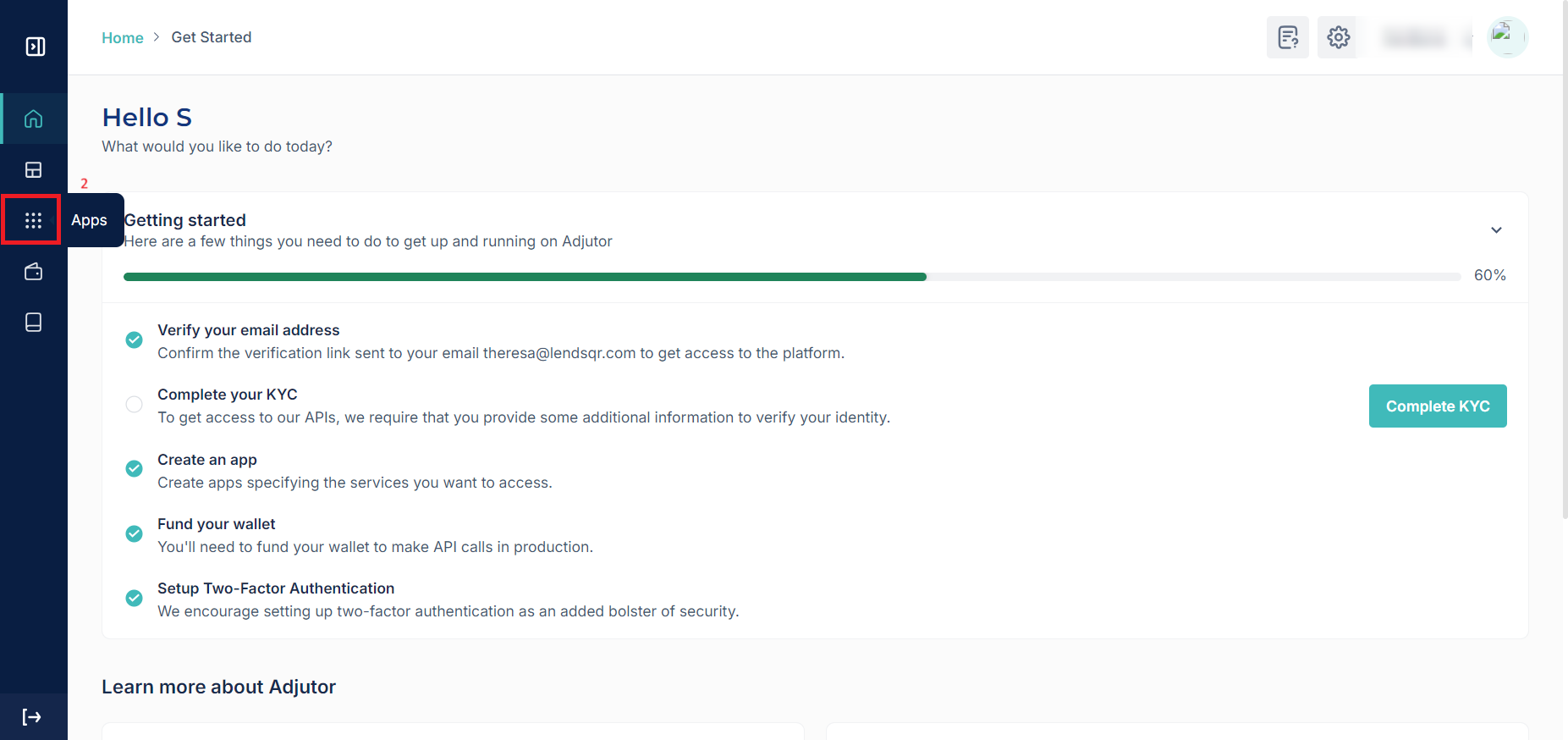
Step 2: Locate the wallet section
Once logged into the platform, navigate to the wallet section located as the fifth icon within the navigation bar.
This section serves as the entry point for wallet management and financial tracking within Adjutor. Users can access wallet balances, funding instructions, and transaction records from this location.
Step 3: Review wallet activity
After opening the wallet section, review the available balance, funding account information, and recent transactions.
If necessary, apply filters to narrow transaction results based on date ranges or status categories. This makes it easier to locate relevant records and monitor account activity efficiently.
Common mistakes to avoid when managing wallet transactions
Although wallet management is relatively simple, some organizations encounter avoidable issues that disrupt operations.
One common mistake is failing to monitor wallet balances regularly. Since API charges are deducted automatically, low balances can lead to service interruptions if funding is delayed.
Another issue involves overlooking transaction history. Organizations that do not review spending patterns may struggle to forecast API costs accurately or identify unusual account activity.
Teams should also avoid relying on manual assumptions regarding usage costs. Reviewing actual wallet transactions provides a more accurate understanding of account spending and operational trends.
Finally, organizations should avoid waiting until balances are critically low before funding wallets. Maintaining a financial buffer helps reduce disruptions and improves service reliability.
Best practices for wallet management
The most effective way to manage wallet activity is through proactive monitoring.
Organizations should regularly review wallet balances and transaction histories to understand usage patterns and anticipate future funding needs. Businesses with high API dependency may benefit from establishing scheduled wallet funding processes to avoid interruptions.
It is also useful to align wallet monitoring with operational reporting cycles. Monthly or weekly reviews can help teams identify trends, forecast expenses, and optimize resource allocation.
Maintaining transaction visibility is equally important. Reviewing historical records helps organizations improve accountability and gain better control over API-related spending.
As API-driven operations continue to grow, financial visibility becomes increasingly important for maintaining efficiency and reliability. The Wallet Transaction page in Adjutor provides users with the tools needed to track balances, understand charges, review transaction history, and manage wallet funding effectively.
By understanding how wallet transactions work and monitoring account activity consistently, organizations can reduce service interruptions, improve budgeting accuracy, and ensure uninterrupted access to the APIs that power their operations.